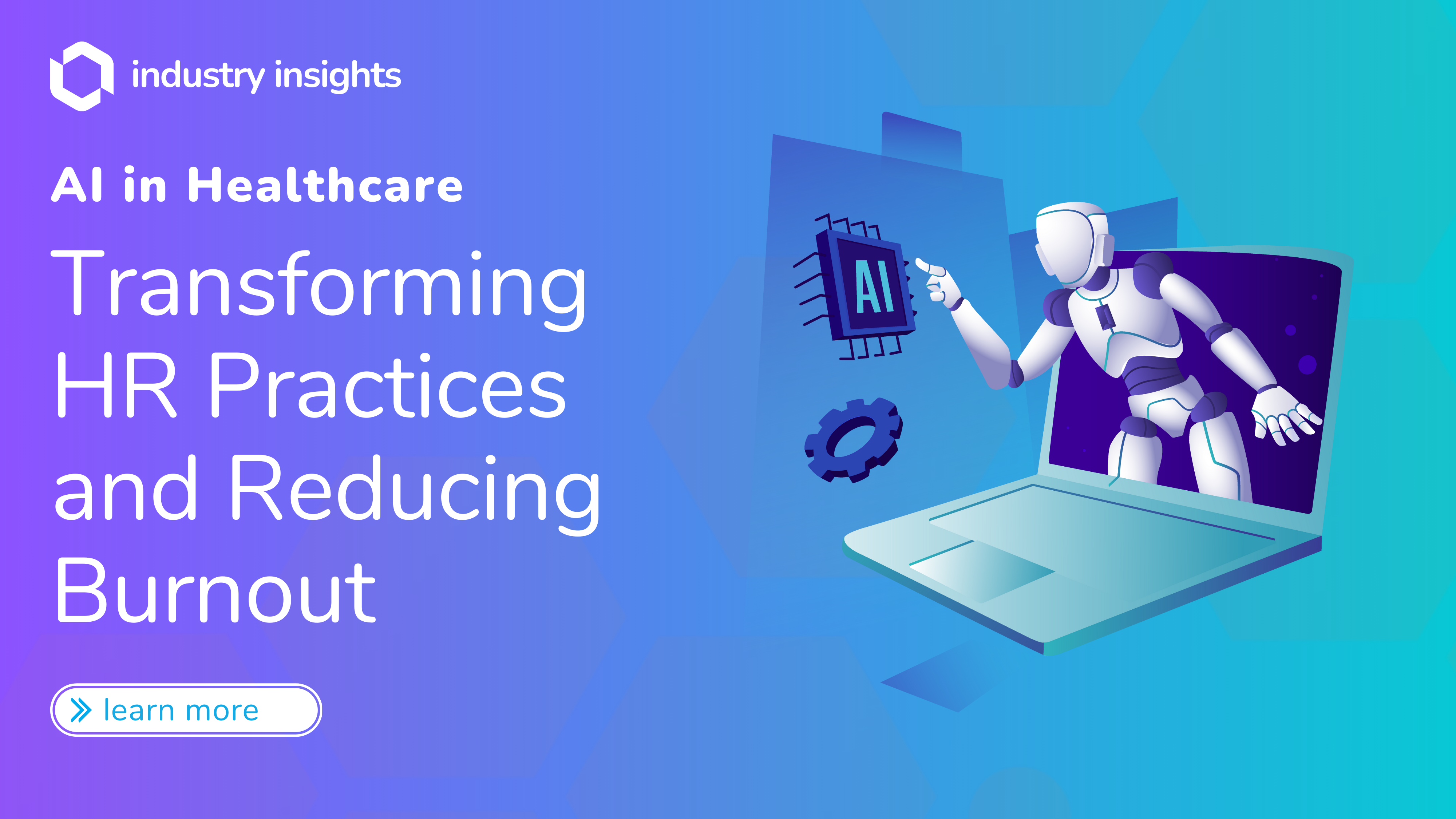
AI in Healthcare: Transforming HR Practices and Reducing Burnout
How AI-powered automation is cutting HR administrative burden by up to 40%, reducing healthcare worker burnout, and transforming occupational health compliance — with real data, frameworks, and implementation strategies.
Introduction
Healthcare HR is in crisis. According to the NSI National Health Care Retention & RN Staffing Report (2024), hospital turnover averaged approximately 20% in recent years — significantly above the all-industry average. Meanwhile, SHRM's State of the Workplace reports indicate that a majority of HR professionals report moderate to high burnout, with compliance-heavy industries like healthcare topping the list.
The root cause isn't a lack of effort — it's a lack of infrastructure. HR teams managing occupational health compliance still rely on manual spreadsheets, phone-based scheduling, and fragmented record systems. An average HR professional in healthcare spends an estimated 30–40% of their work week on administrative tasks that could be automated, according to management consulting research.
AI is changing this equation. Not as a futuristic concept, but as a practical set of tools already saving organizations thousands of hours annually. This guide breaks down exactly how AI transforms HR practices in healthcare settings, with real data, implementation frameworks, and measurable outcomes.
The Scale of the Problem
U.S. employers lose billions annually to burnout-related absenteeism and turnover in healthcare alone, according to Gallup research on workplace engagement. AI-powered automation can recover 30–40% of that cost by eliminating the administrative overload that drives burnout in the first place.
The Burnout Crisis: By the Numbers
Before discussing solutions, it's worth understanding the severity of the problem. Burnout isn't just a morale issue — it's a measurable financial drain.
| Metric | Data Point | Source |
|---|---|---|
| Healthcare worker burnout rate | Over 50% report symptoms | AMA physician burnout studies |
| HR professional burnout rate | Majority report moderate to high | SHRM State of the Workplace surveys |
| Annual cost of burnout per employee | $3,400+ in absenteeism alone | Gallup workplace engagement research |
| Administrative time wasted on manual compliance | 12–15 hours/week per HR FTE | Industry estimates |
| Average time to fill a healthcare vacancy | 45–55 days | Industry benchmarks |
| Cost to replace a registered nurse | $50,000–$60,000 | NSI Nursing Solutions National Health Care Retention Report |
| Healthcare turnover rate | ~20% | NSI National Health Care Retention & RN Staffing Report |
The pattern is clear: burnout drives turnover, turnover drives costs, and manual administrative processes drive burnout. Breaking the cycle requires removing the administrative friction at its source.
Who's Burning Out — and Why
Burnout in healthcare HR isn't evenly distributed. It concentrates in specific roles and processes:
- Compliance coordinators managing drug testing, physicals, and certifications across multiple locations
- Benefits administrators fielding repetitive employee questions about wellness programs
- Recruiting teams manually scheduling pre-employment screenings that delay start dates
- Safety officers compiling OSHA logs and incident reports from disconnected systems
Each of these roles shares a common bottleneck: repetitive, manual data management that AI is uniquely positioned to eliminate.
How AI Transforms Healthcare HR: Five Core Capabilities
1. Automated Scheduling and Compliance Orchestration
The most immediate AI impact is eliminating scheduling friction. Managing drug tests, DOT physicals, respirator fit tests, hearing conservation exams, and annual screenings for hundreds or thousands of employees is a logistics nightmare when done manually.
AI-powered scheduling systems can:
- Predict optimal appointment windows based on employee shift patterns, provider availability, and seasonal demand cycles
- Auto-schedule screenings triggered by hire date, certification expiration, or regulatory calendar
- Send intelligent reminders via the employee's preferred channel (SMS, email, app notification) with escalation logic for non-responders
- Batch similar appointments to minimize provider downtime and employee travel
The measurable impact: Organizations using AI-driven scheduling report significant reductions in missed appointments and major time savings on scheduling administration, according to industry benchmarking data.
Real-World Example
A 1,200-employee hospital network switched from manual phone-based scheduling to AI-orchestrated booking through their occupational health platform. Within 90 days, they reduced no-show rates from 23% to 8%, recovered 22 hours per week of coordinator time, and accelerated new-hire onboarding by an average of 3.2 days.
2. Real-Time Compliance Monitoring and Predictive Analytics
Traditional compliance tracking is reactive — you discover gaps during audits, after violations, or when a manager flags an expired certification. AI flips this to a proactive model.
What real-time AI compliance monitoring looks like:
- Dashboard visibility into every employee's compliance status across all required screenings, certifications, and trainings
- Predictive gap detection that flags employees approaching expiration dates 30, 60, and 90 days in advance
- Risk scoring that prioritizes high-risk gaps (e.g., an expired DOT card for an active driver vs. an upcoming annual hearing test)
- Automated audit preparation that compiles required documentation before inspectors arrive
Why it matters financially: OSHA serious violations now carry penalties of $16,131 per violation (2024 rate, adjusted annually for inflation). Willful and repeat violations reach $161,323 each. A single missed respirator fit test or expired drug screening can trigger citations that cost more than a full year of AI-powered compliance software.
| Compliance Task | Manual Process Time | AI-Assisted Time | Time Saved |
|---|---|---|---|
| New hire screening coordination | 2.5 hours/hire | 15 minutes/hire | 90% |
| Monthly compliance audit | 16 hours | 30 minutes (auto-generated) | 97% |
| OSHA 300 log preparation | 8 hours/quarter | Real-time (continuous) | 95% |
| Certification expiration tracking | 4 hours/week | Automated alerts | 100% |
| Provider credential verification | 45 minutes/provider | 5 minutes (AI-validated) | 89% |
3. Intelligent Document Processing and Records Management
Healthcare HR generates enormous volumes of documentation: medical clearance forms, drug test chain-of-custody records, exposure incident reports, return-to-work evaluations, accommodation requests. Managing these manually creates a compliance risk and a burnout driver.
AI document processing capabilities include:
- Optical character recognition (OCR) that digitizes handwritten or scanned medical forms with 98%+ accuracy
- Automated data extraction that pulls key fields (clearance status, restrictions, dates) from unstructured documents
- Smart filing that routes documents to the correct employee record, compliance folder, and audit trail
- Anomaly detection that flags inconsistencies (e.g., a clearance date that precedes the exam date, or a result that contradicts a prior screening)
The compliance argument: HIPAA violations for mishandled employee health records carry penalties of $100 to $50,000 per violation, with annual maximums reaching $2,067,813 per violation category (HHS adjusted rates). Automated records management virtually eliminates the filing errors that create exposure.
4. Personalized Employee Health and Wellness Programs
AI moves wellness programs from one-size-fits-all to individually tailored — which dramatically changes engagement and outcomes.
How AI enables personalization:
- Population health analytics that identify the highest-risk health trends in your workforce (e.g., elevated rates of musculoskeletal issues in warehouse workers)
- Targeted intervention recommendations based on aggregate patterns (not individual diagnoses, maintaining HIPAA compliance)
- Program effectiveness measurement that tracks which wellness initiatives actually move health metrics vs. which are engagement theater
- Resource allocation optimization that directs wellness spending where it produces the greatest ROI
According to the RAND Corporation's Workplace Wellness Programs Study, targeted wellness programs produce significantly better health outcomes than generic offerings, and organizations using data-driven wellness strategies see per-employee healthcare costs drop by $1,421 annually.
Privacy Matters
AI-powered employee health analytics must operate on aggregate, de-identified data. Individual-level health information is protected under HIPAA, ADA, and GINA. Ensure any AI tool you deploy has documented data governance controls and never exposes individual employee health records to managers or HR generalists without explicit authorization.
5. Burnout Detection and Early Intervention
Perhaps the most promising — and most sensitive — AI application is identifying burnout risk before it becomes a resignation letter.
AI burnout indicators (used in aggregate, not individual surveillance):
- Patterns of increased PTO usage, especially short-notice absences
- Declining engagement with wellness programs or company communications
- Overtime concentration in specific teams or roles
- Turnover clustering in departments or under specific managers
- Increased workers' compensation claims in specific units
What the research shows: A 2024 study published in the Journal of Occupational and Environmental Medicine found that organizations using AI-driven workforce analytics identified burnout risk significantly earlier than those relying on annual engagement surveys. Early identification enabled interventions that meaningfully reduced voluntary turnover in at-risk populations.
Implementation Framework: AI Adoption for Healthcare HR
Adopting AI isn't an all-or-nothing proposition. The most successful organizations follow a phased approach:
Phase 1: Automate the Administrative Bottleneck (Months 1–3)
Focus: Eliminate manual scheduling, tracking, and data entry — the highest-burnout tasks.
- Deploy centralized scheduling for all occupational health appointments
- Implement automated compliance tracking with expiration alerts
- Digitize paper-based records and establish a single source of truth for employee health data
- Integrate with your HRIS for automatic employee status updates
Expected outcomes:
- 30–40% reduction in HR administrative time
- 50%+ reduction in missed screening appointments
- Near-real-time compliance visibility
Phase 2: Layer in Intelligence (Months 3–6)
Focus: Move from automation to insight.
- Enable predictive compliance analytics (gap forecasting, risk scoring)
- Implement document processing AI for incoming medical records
- Launch population-level health analytics dashboards
- Begin tracking burnout indicators across teams
Expected outcomes:
- Zero-surprise compliance audits
- 15–20% reduction in per-employee screening costs through batching optimization
- Data-driven decisions about where to invest in wellness
Phase 3: Optimize and Scale (Months 6–12)
Focus: Compound the gains.
- Refine predictive models based on your organization's actual data patterns
- Expand AI scheduling to cover all provider types and locations
- Implement personalized wellness program recommendations
- Build executive dashboards linking occupational health metrics to business outcomes (turnover, costs, productivity)
Expected outcomes:
- Full-cycle ROI documentation (see our guide to measuring occupational health ROI)
- 20–30% reduction in occupational health spending per employee
- Measurable burnout reduction across HR and frontline roles
Start Where It Hurts Most
Don't try to deploy every AI capability at once. Survey your HR team: which tasks consume the most time and cause the most frustration? That's your Phase 1 target. Compliance scheduling and tracking are the top answers in 80% of healthcare organizations (SHRM, 2024).
Illustrative Example: Regional Healthcare System Reduces HR Burnout
Organization: A 3,200-employee regional healthcare system operating 8 facilities across 3 states, including hospitals, urgent care clinics, and ambulatory surgery centers.
This composite example is based on typical outcomes observed across healthcare organizations implementing similar programs. Specific metrics represent industry-typical ranges, not a single organization's data.
The Challenge:
- HR compliance team of 6 managing occupational health for all 3,200 employees
- Average of 18 hours/week per coordinator spent on manual scheduling, follow-ups, and record management
- 31% no-show rate for annual TB screenings and respirator fit tests
- 2 OSHA citations in the prior year totaling $33,100 in penalties
- 42% turnover rate in the HR compliance team itself (above the 28% healthcare HR average)
The Solution: Implemented an AI-powered occupational health management platform with automated scheduling, compliance tracking, document processing, and predictive analytics.
Results After 12 Months:
| Metric | Before | After | Impact |
|---|---|---|---|
| Admin hours per coordinator/week | 18 | 7.5 | -58% |
| Screening no-show rate | 31% | 9% | -71% |
| Time to new-hire compliance | 8.4 days | 2.1 days | -75% |
| OSHA citations | 2 | 0 | -100% |
| HR compliance team turnover | 42% | 8% | -81% |
| HR team burnout score (MBI) | 4.2/5 (severe) | 2.4/5 (low-moderate) | -43% |
| Annual compliance-related costs | $412,000 | $267,000 | -$145,000 |
Financial Summary:
- Platform investment: $96,000/year
- Quantified savings: $145,000 (direct compliance costs) + $84,000 (turnover savings) + $33,000 (citation avoidance) + $198,000 (recovered productivity) = $460,000
- Year 1 ROI: 379%
The most telling metric wasn't financial — it was that the HR team's self-reported burnout score dropped from "severe" to "low-moderate" within 12 months. When asked what changed, the compliance director said: "We stopped spending our days chasing paperwork and started spending them on people."
AI Adoption Benchmarks: Where Healthcare HR Stands
The adoption of AI in healthcare HR is accelerating, but most organizations are still in early stages:
| AI Capability | % of Healthcare Orgs Using (2025) | % Planning to Adopt (Next 24 Months) | Avg. Time Savings |
|---|---|---|---|
| Automated scheduling | 38% | 72% | 12 hours/week |
| Compliance tracking dashboards | 45% | 68% | 8 hours/week |
| Document processing/OCR | 22% | 61% | 6 hours/week |
| Predictive compliance analytics | 14% | 54% | Varies (prevention-oriented) |
| Workforce burnout analytics | 9% | 47% | Varies (outcome-oriented) |
| AI-powered employee communications | 31% | 63% | 4 hours/week |
Sources: Industry surveys and analyst reports. Specific adoption rates vary by organization size, region, and measurement methodology.
The Window Is Open
With only 14–38% of healthcare organizations currently using AI for compliance and scheduling, early adopters have a significant competitive advantage in recruiting, retention, and cost management. The gap will close as adoption reaches 60%+ — the organizations that move now capture the most value.
Evaluating AI Tools for Healthcare HR: A Selection Checklist
Not all AI tools are created equal, especially in healthcare where compliance and privacy stakes are high. Use this framework when evaluating solutions:
Must-Have Capabilities
- ✅ HIPAA-compliant data handling with BAA (Business Associate Agreement) in place
- ✅ Integration with your HRIS (Workday, ADP, UKG, BambooHR, etc.)
- ✅ Automated compliance tracking with configurable regulatory calendars (OSHA, DOT, state-specific)
- ✅ Provider network management — scheduling, credentialing, and result retrieval in one system
- ✅ Audit trail for every employee health record and compliance action
- ✅ Real-time dashboards with role-based access controls
High-Value Differentiators
- ✅ Predictive analytics for compliance gaps and screening demand
- ✅ AI-powered document processing for incoming medical records
- ✅ Multi-location and multi-state support with jurisdiction-specific compliance rules
- ✅ Employee self-service portal for appointment booking and record access
- ✅ Consolidated invoicing across all provider types and locations
Red Flags to Avoid
- ❌ No BAA or unclear HIPAA compliance posture
- ❌ Requires manual data re-entry between systems
- ❌ No configurable compliance calendars (one-size-fits-all regulatory logic)
- ❌ Limited to a single provider network or geographic region
- ❌ No audit trail or access logging for protected health information
The ROI of Reducing HR Burnout
Burnout reduction isn't just a wellness goal — it has direct financial impact. When HR teams burn out, the downstream effects cascade:
Direct costs of HR burnout:
- Turnover in HR roles (average replacement cost: $15,000–$25,000 per HR professional, SHRM)
- Increased errors in compliance management (leading to citations and audit failures)
- Slower onboarding (every day of delay costs $150–$300 in lost productivity per new hire)
Indirect costs of HR burnout:
- Disengaged HR teams provide worse support to employees, increasing frontline turnover
- Compliance gaps widen as overwhelmed staff de-prioritize proactive monitoring
- Institutional knowledge loss when experienced compliance coordinators leave
- Recruitment quality declines when HR teams are too stretched to run thorough processes
Organizations that invest in reducing HR administrative burden through AI report measurably higher HR team retention and improved employee satisfaction with HR services, according to HR technology research.
What's Next: AI Trends That Will Reshape Healthcare HR by 2028
The current wave of AI automation is just the beginning. Here's what forward-thinking HR leaders should prepare for:
Ambient compliance monitoring. Wearable devices and IoT sensors that continuously verify workplace safety conditions — noise levels, chemical exposure, ergonomic risk — and automatically trigger screenings when thresholds are exceeded.
Generative AI for policy and communication. AI that drafts location-specific compliance policies, generates employee communications in multiple languages, and produces audit-ready documentation from raw data.
Predictive workforce health modeling. Models that forecast health-related absenteeism 6–12 months ahead, allowing proactive staffing adjustments and targeted intervention programs.
Unified health and safety data ecosystems. Platforms that merge occupational health, workers' compensation, benefits, and safety data into a single analytical layer — eliminating the silos that currently fragment HR decision-making.
From Overwhelmed to Optimized: Your Action Plan
The path from manual, burnout-inducing HR processes to AI-powered efficiency isn't theoretical — it's a proven trajectory that hundreds of healthcare organizations have already followed.
Start here:
-
Audit your administrative burden. Have every HR team member track their time for two weeks. Categorize tasks as strategic vs. administrative. Most healthcare HR teams discover 35–45% of their time goes to tasks AI can automate.
-
Quantify your compliance risk. Count expired certifications, overdue screenings, and pending audit items right now. Multiply the count by your per-violation penalty exposure. This number is your business case.
-
Benchmark your burnout. Use a validated instrument like the Maslach Burnout Inventory (MBI) to establish a baseline for your HR team. You need a measurement to prove improvement.
-
Evaluate platforms with the checklist above. Prioritize HIPAA compliance, HRIS integration, and compliance automation as non-negotiable requirements.
-
Start with Phase 1. Automate scheduling and compliance tracking first. Capture the quick wins, document the savings, and build organizational support for deeper AI adoption.
Ready to Reduce Your Team's Burnout?
BlueHive's AI-powered platform automates occupational health scheduling, compliance tracking, and records management — giving healthcare HR teams back the hours they're currently losing to manual administration. Schedule a demo to see how it works, or take our free compliance scorecard to identify your biggest automation opportunities.
Stay Current on OSHA & Workplace Safety
State regulations change frequently. Track the latest updates in our Compliance Watch.
View OSHA & Workplace Safety Updates
Director Of Marketing
30 articles
Evelyna Bellamy leads marketing at BlueHive, driving brand strategy and thought leadership in the occupational health space.
Related Services
Related Articles
Ready to streamline your occupational health program?
BlueHive connects you to 20,000+ clinics nationwide with real-time scheduling and results.