Top 5 Occupational Health Compliance Mistakes HR Teams Still Make in 2025
Executive Summary
Still chasing OSHA logs, scrambling drug test results, or unsure about ADA compliance? This must-read 2025 whitepaper reveals the 5 biggest occupational health compliance mistakes HR teams still ma...
Personalize This Whitepaper
Get examples, regulations, and recommendations tailored to your industry, state, and role.
Staying compliant should not feel like a second job. Yet many teams still stumble on the same avoidable pitfalls: late or incomplete OSHA records, inconsistent drug screening steps, missing respirator program basics, fuzzy rules on medical information, and fragmented vaccine tracking.
The good news is that each mistake has a straightforward fix. This guide shows what usually goes wrong, the exact rule or guideline behind it, and a simple plan to get back on track. Where it helps, we also note how platforms like BlueHive can reduce clicks, paperwork, and back-and-forth.

The Penalty Landscape
What non-compliance really costs in 2025
Per serious violation
OSHA penalty per serious violation in 2025
Per willful violation
Maximum OSHA penalty for willful or repeat violations
Record retention
Required retention period for OSHA injury/illness logs
Mistake #1: Treating OSHA Injury and Illness Records as “Once a Year Paperwork”
The Issue: Many HR teams wait until January to scramble through the OSHA 300 log. That often means missing cases, late submissions, or wrong forms.
Why it Matters: Osha requires continuous recordkeeping, not just an annual check-in (OSHA, n.d.).
Quick Fix:
- Update incidents as they happen.
- Set a recurring reminder for the February posting and electronic submission.
- Train backups so one person isn’t carrying the load.
BlueHive Advantage: Utilize BlueHive’s reporting and analytics to ensure that your workforce is compliant, year-round.

Mistake #2: Delaying DOT Drug Testing
The Issue: Drivers in safety-sensitive roles sometimes start work before their pre-employment drug test results are in. That’s a compliance red flag.
Why it Matters: DOT regulations clearly state that drivers cannot perform safety-sensitive duties until they’ve passed the required testing (49 CFR 382.301).
Quick Fix:
- Gate the first day of work on verified results.
- Use a standard checklist for collections, reviews, and documentation.
- Flag DOT positions in your HR system so that nothing slips through.
BlueHive Advantage: BlueHive’s centralized platform allows you to quickly schedule drug testing at one of our network of over 20,000 clinics and track results.

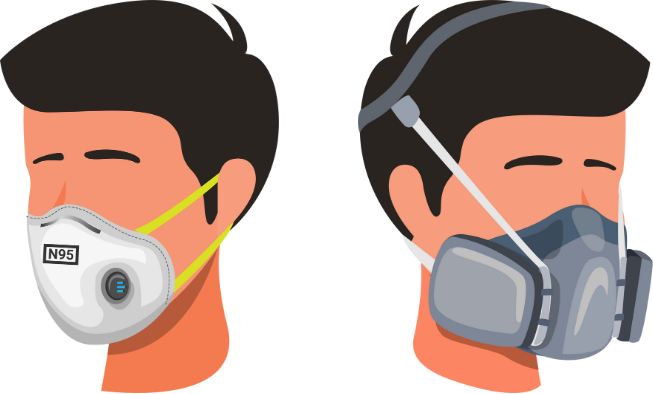
Mistake #3: Skipping Respirator Medical Evaluations and Annual Fit Tests
The Issue: Buying respirators and handing out a one-time training session isn’t enough. Without medical evaluations and yearly fit tests, you’re out of compliance, and your workers aren’t truly protected.
Why it Matters: OSHA’s Respiratory Protection Standard requires a full program, including medical clearance and annual fit tests (29 CFR 1910.134).
Quick Fix:
- Schedule medical evaluations before mask use.
- Fit test annually - or sooner if masks or faces change.
- Store all test records in one place.
BlueHive Advantage: With BlueHive, you can set up automated reminders for expiring certifications, including respirator fit testing.
Mistake #4: Overstepping on Medical Questions (ADA)
The Issue: It’s tempting to ask detailed health questions during hiring or employment, but too much probing can cross ADA boundaries.
Why it Matters: The ADA only allows disability-related inquiries that are job-related and consistent with business necessity (EEOC, 2008).
Quick Fix:
- Ask only what’s essential for the job.
- Keep medical info separate from personnel files.
- Train managers so they know what’s off-limits.
BlueHive Advantage: In BlueHive’s employer, provider, and employee dashboards, PHI and other sensitive information are limited to those who need to access them based on their roles.

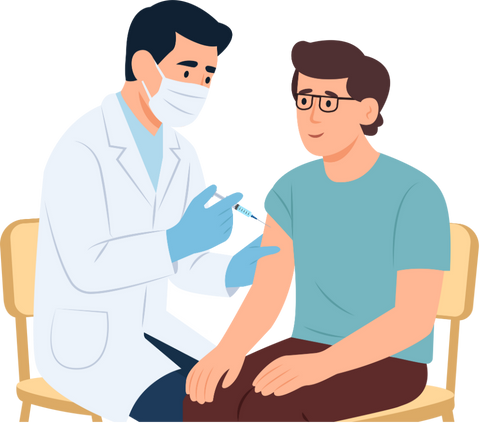
Mistake #5: Treating Immunizations as “Set It and Forget It”
The Issue: Spreadsheets collect dust, contractors fall through the cracks, and new CDC vaccine guidance goes unnoticed.
Why it Matters: The CDC updates its adult immunization schedules regularly. Staying current is part of keeping your workforce protected. (CDC, 2025)
Quick Fix:
- Centralize vaccine records.
- Automate reminders for flu shots, Hep B, and other role-specific vaccines.
- Recheck CDC updates quarterly.
BlueHive Advantage: BlueHive’s platform offers rule-based reminders, easy upload of records, and analytics that flag gaps.
Are You Making These Mistakes?
Check off each mistake you've already addressed
Treating OSHA recordkeeping as annual paperwork
Delaying DOT drug & alcohol testing
Skipping or delaying respirator fit tests
Overstepping ADA boundaries in medical inquiries
Treating immunizations as set-and-forget
Need help closing compliance gaps? See how BlueHive automates compliance →
A Better Habit: Think “Total Worker Health”
Instead of juggling compliance tasks separately, many employers are moving toward the Total Worker Health model - integrating safety and well-being under one plan (NIOSH, 2024). The result? Less duplication, faster clearances, and healthier, happier employees.
Quick Checklist:
- OSHA Logs are up to date.
- DOT drug tests cleared before start dates
- Respirator program includes medical evals and annual fit tests
- ADA rules understood, medical info kept separate
- Immunizations tracked and updated per CDC schedules

Conclusion
Compliance doesn’t have to feel like a maze of acronyms and deadlines. With a little structure - and the right tech partner - you can keep your team on track, avoid fines, and free up more time for what HR is really about: people.
BlueHive makes it easier by putting compliance reminders, provider scheduling, and recordkeeping all in one place. Less paper, fewer headaches, more peace of mind.
Download the Whitepaper
Loading flipbook...
Sources
- Centers for Disease Control and Prevention. (2025, August 7). Adult immunization schedule by age. U.S. Department of Health & Human Services. https://www.cdc.gov/vaccines/hcp/imz-schedules/adult-age.html
- Centers for Disease Control and Prevention, National Institute for Occupational Safety and Health. (n.d.). About the Total Worker Health approach. U.S. Department of Health & Human Services. https://www.cdc.gov/niosh/twh/about/index.html
- Equal Employment Opportunity Commission. (2000). Enforcement guidance on disability-related inquiries and medical examinations of employees under the ADA. U.S. Equal Employment Opportunity Commission. https://www.eeoc.gov/laws/guidance/enforcement-guidance-disability-related-inquiries-and-medical-examinations-employees
- Occupational Safety and Health Administration. (n.d.). Injury and illness recordkeeping and reporting requirements. U.S. Department of Labor. https://www.osha.gov/recordkeeping
- Occupational Safety and Health Administration. (n.d.). Respiratory protection: 29 CFR 1910.134. U.S. Department of Labor. https://www.osha.gov/laws-regs/regulations/standardnumber/1910/1910.134
- U.S. Government Publishing Office. (n.d.). 49 CFR §382.301 Pre-employment testing. Electronic Code of Federal Regulations. https://www.ecfr.gov/current/title-49/subtitle-B/chapter-III/subchapter-B/part-382/subpart-C/section-382.301
Stay Current on OSHA Compliance
State regulations change frequently. Track the latest updates in our Compliance Watch.
View OSHA Compliance Updates
Content Developer
71 articles
Chris Davis is a content developer at BlueHive, covering occupational health compliance, workplace safety, and industry best practices.
Related Services
Related White Papers
 White Paper
2026 Occupational Health Compliance Timeline and Checklist
Chris Davis·4 min read White Paper
Compliance Checklist: What HR Leaders Need to Know About OSHA in 2025
Chris Davis·10 min read White Paper
Your Hiring Process is a Candidate Experience: How Occupational Health Steps Can Build Trust
Chris Davis·44 min readReady to streamline your occupational health program?
BlueHive connects you to 20,000+ clinics nationwide with real-time scheduling and results.