What Surprises New Employers About Occupational Health (From the Person Who Onboards You)
I'm usually the first person you talk to at BlueHive. Here are the things that surprise employers most when they start occupational health screening — and the questions they ask me first.
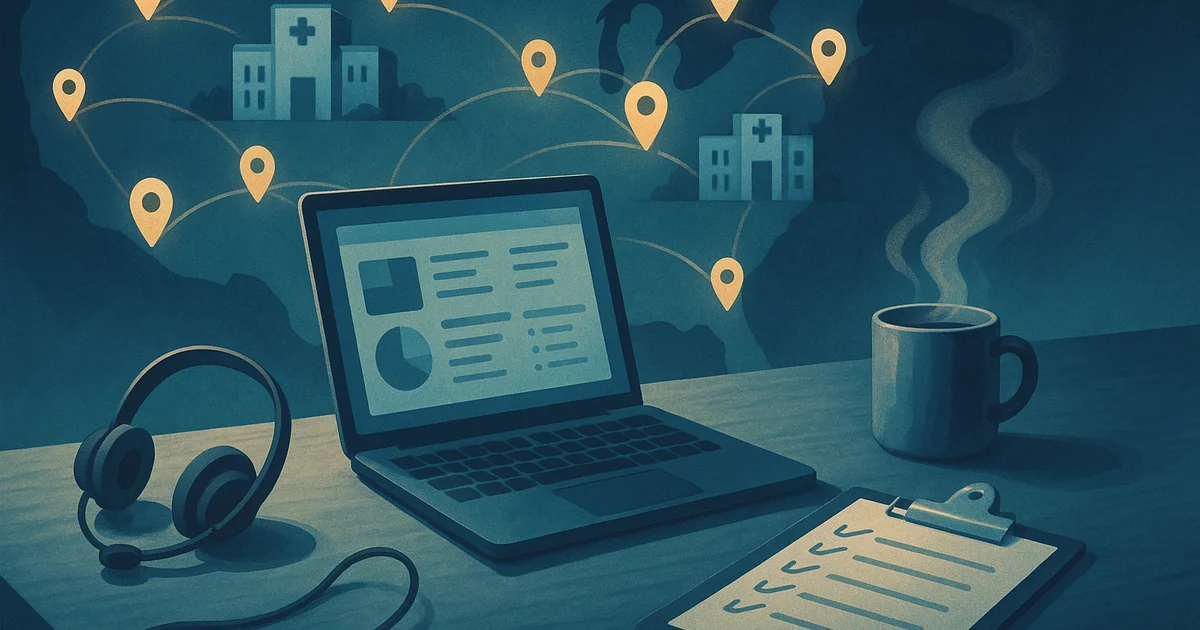
I have one of the best seats in the building: I'm usually the first person an employer talks to at BlueHive. Before anyone places an order, runs a single screen, or thinks about compliance, they talk to someone like me — and I get to hear the very first thing on their mind.
After enough of those first conversations, I've started to notice patterns. The same worries come up. The same questions come up. And, happily, the same relief comes up once people realize how this actually works.
So here's an honest field report from the front desk: what tends to surprise employers most when they start occupational health, and the questions they ask me first.
From the Front Desk
What getting started actually looks like from the first conversation
Order to start
Begin with a single screen — no months-long rollout required
First questions
The things employers ask us most on a first call
States covered
We coordinate care near your people, wherever they are
Guided setup
We map the right screens and locations with you
Surprise #1: You don't have to become a compliance expert to get started
This is the big one. People often think they need to read every regulation and have a perfect program mapped out before they can even call. They don't.
My whole job is to meet you where you are. You tell me what you're hiring for and where, and I help translate that into what you actually need — which screens, which physicals, which locations. You bring the workforce; we bring the map.
You don't need the answers yet
The most common thing I hear is "I'm not even sure what to ask for." That's a perfectly normal starting point — figuring that out together is the first step, not a prerequisite.
In practice, here's all you actually need on hand before that first conversation:
What you need to get started
Tick what you already have — that’s genuinely all it takes to begin.
Don’t have everything? That’s fine — we fill the gaps together.
Surprise #2: It starts with one order, not one giant project
A lot of employers brace themselves for a months-long rollout. But you don't have to stand up an entire program on day one. Most people start with a single, real need — one new hire, one location, one screen — and grow from there.
Starting small is genuinely the easiest way in. It lets you see how the process feels before you scale it across your whole workforce.
How Getting Started Works
Four steps from first conversation to results — tap through each one
Tell us what you’re hiring for
A quick conversation about your roles, your locations, and anything you already know you need. You don’t need a finished program — that’s what this step is for.
Step 1 of 4 — Tell us
Prefer to watch instead of read? The Employer Onboarding Series walks through sign-up and your first order on screen — most people are done in under five minutes.
Surprise #3: The network comes to your people
Employers often assume their team has to live near a specific clinic, or that they'll be stuck driving people across town. The reality is the opposite: with a nationwide network of clinics, the goal is to find care near your people — wherever they are — instead of making them come to us.
For anyone hiring across multiple sites or multiple states, this is usually the moment the shoulders drop a little.
Surprise #4: Results don't have to live in a filing cabinet
The last pleasant surprise is how the paperwork isn't. Employers who are used to chasing faxes and PDFs are often surprised that results can be shared digitally and tracked in one place, instead of scattered across inboxes and folders.
I can't tell you how many first conversations end with "wait, that's it?" — and that's exactly the reaction we're going for.
The most common reaction at the end of a first onboarding call.
“Wait — that's it?”

Eszter Erdei
Growth Development Representative, BlueHive
The questions employers ask me first
These are the questions that come up in almost every first conversation. I've kept the answers to what I actually handle — getting you started. For the deeper regulatory details, I'll point you to the right place.
Frequently Asked Questions
A quick word on cost
The honest answer to "what does it cost?" is that it depends on which screens you need and where your people are — there's no single sticker price. The good news is the pieces are predictable, so you can ballpark it. Here's a look at how common occupational health services tend to stack up:
Occupational Health Service Pricing by State
Select a service to explore state-level pricing variation
$115
Median State Average
$75
Lowest (Arizona)
$185
Highest (Idaho)
Structured around a defined certification pathway. Certified medical examiners listed on the FMCSA National Registry create a more standardized framework.
All Services at a Glance
For the regulatory deep end
When you want the detailed rules, our compliance team has you covered — start with the occupational health getting-started guide, the OSHA compliance checklist for HR leaders, or hiring across state lines in healthcare.
The real takeaway
If there's one thing I'd tell every new employer, it's this: the hardest part is usually just starting the conversation. Once you do, occupational health tends to be far simpler — and far more human — than the paperwork reputation suggests.
Not sure which of those situations is yours? This will point you in the right direction:
Where Should You Start?
Pick what’s closest to your situation
That first step is literally my favorite part of the job. If you're staring at a hiring list and not sure where to begin, that's exactly the moment to reach out.
Growth Development Representative
Eszter Erdei is a Growth Development Representative at BlueHive Health, where she guides employers from first inquiry to first order — handling qualification, onboarding, and account activation so getting a workforce screened and compliant feels simple.
Related Services
Related Articles

Ready to streamline your occupational health program?
BlueHive connects you to 20,000+ clinics nationwide with real-time scheduling and results.
Community Discussion
Have questions about hr & onboarding?
Get answers from occupational health providers and AI research in our community forum.
Ask the Hive