Preventing Occupational Noise-Induced Hearing Loss: Best Practices for Employers
OSHA estimates 22 million U.S. workers face hazardous noise annually, yet noise-induced hearing loss is 100% preventable. Learn the audiometric testing, engineering controls, and hearing conservation program requirements that keep your workforce compliant and protected.
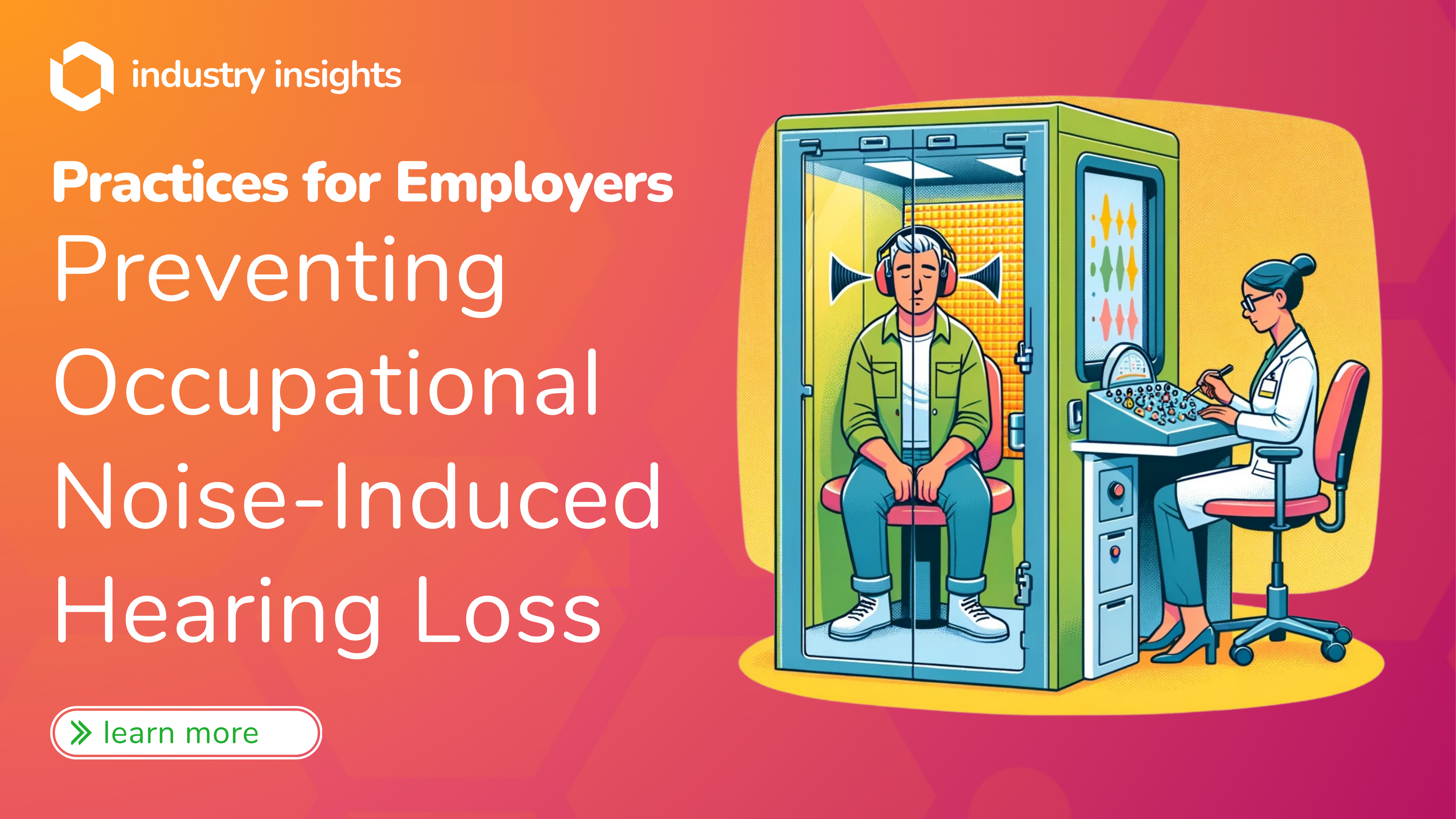
Every day, approximately 22 million American workers are exposed to hazardous noise levels on the job. According to the CDC and NIOSH, roughly 12 percent of the U.S. working population suffers from some degree of hearing difficulty, and occupational noise exposure is the leading preventable cause. Workers' compensation claims for hearing loss can be significant, with individual claims often exceeding $50,000, and OSHA penalties for hearing conservation violations can reach six figures per inspection. The industries at greatest risk include manufacturing, construction, mining, transportation, and agriculture, but hazardous noise can appear in any work environment from call centers to concert venues.
The most critical fact employers need to understand: Noise-Induced Hearing Loss (NIHL) is 100 percent preventable. With the right combination of engineering controls, audiometric testing, hearing protection, and employee education, no worker should ever lose their hearing because of their job.
This guide walks employers through the science of NIHL, OSHA regulatory requirements under 29 CFR 1910.95, and a step-by-step approach to building a hearing conservation program that protects your workforce and keeps your organization compliant.
NIHL Is Permanent and Irreversible
Once the hair cells in the inner ear are destroyed by noise exposure, they do not regenerate. There is no surgery, medication, or hearing aid that can fully restore natural hearing. Prevention is the only cure.
The Science of Noise-Induced Hearing Loss
Understanding how noise damages hearing is essential for employers building effective prevention programs. Sound travels through the ear canal and vibrates the eardrum, which transmits energy through the middle ear bones to the cochlea in the inner ear. Inside the cochlea, thousands of microscopic hair cells convert sound vibrations into electrical signals that the brain interprets as sound.
When noise is excessively loud or exposure is prolonged, these delicate hair cells become overstimulated and begin to die. Unlike many other cells in the body, cochlear hair cells in humans do not regenerate. The damage is cumulative and irreversible. Workers may not notice gradual hearing loss for years, which is why regular audiometric testing is so critical.
NIHL typically begins in the high-frequency range (4,000 to 6,000 Hz), making it difficult to hear consonant sounds in speech. Workers often report that they can hear people talking but cannot understand what is being said. Tinnitus, a persistent ringing or buzzing in the ears, frequently accompanies NIHL and can be debilitating on its own.
Risk Factors That Accelerate Hearing Damage
Several factors beyond noise level influence how quickly hearing damage occurs:
- Duration of exposure — longer shifts and more years on the job compound damage
- Impulse noise — sudden, sharp sounds (gunshots, hammer strikes, explosions) are more damaging than steady-state noise at the same decibel level
- Individual susceptibility — genetics, age, and pre-existing conditions affect vulnerability
- Ototoxic chemical exposure — solvents, heavy metals, and certain medications amplify noise damage
- Vibration — whole-body or hand-arm vibration combined with noise increases risk
Ototoxic Chemicals Amplify Noise Damage
Workers exposed to chemicals such as toluene, xylene, styrene, carbon disulfide, lead, and mercury face a significantly higher risk of hearing loss even at noise levels below OSHA action levels. OSHA recommends monitoring hearing more frequently when workers have dual exposure to noise and ototoxic substances. Always cross-reference your chemical inventory with known ototoxic agents.
OSHA Noise Exposure Standards
OSHA's occupational noise exposure standard, 29 CFR 1910.95, establishes the legal framework for protecting workers from hazardous noise. Employers must understand the key exposure limits and when a hearing conservation program becomes mandatory.
Noise Exposure Limits
| Standard | Exposure Limit | Time-Weighted Average | Notes |
|---|---|---|---|
| OSHA PEL | 90 dBA | 8-hour TWA | Maximum permissible exposure; engineering or administrative controls required above this level |
| OSHA Action Level | 85 dBA | 8-hour TWA | Triggers mandatory hearing conservation program |
| NIOSH Recommended | 85 dBA | 8-hour TWA | NIOSH recommends this as the PEL; uses 3 dB exchange rate vs. OSHA's 5 dB |
| ACGIH TLV | 85 dBA | 8-hour TWA | Aligns with NIOSH recommendation |
Common Workplace Noise Sources
| Noise Source | Typical dBA Range | Notes |
|---|---|---|
| Normal conversation | 60–65 dBA | Baseline reference |
| Forklift | 85–95 dBA | At or above action level |
| Power drill | 90–100 dBA | Exceeds PEL with extended use |
| Power saw (circular/table) | 95–110 dBA | Hearing protection mandatory |
| Pneumatic riveter | 105–115 dBA | Significant risk with brief exposure |
| Jackhammer | 110–120 dBA | Dual protection recommended |
| Jet engine at 100 feet | 130+ dBA | Immediate damage risk; pain threshold |
A key point many employers miss: OSHA uses a 5 dB exchange rate (also called the "doubling rate"), meaning that for every 5 dB increase above 90 dBA, the allowed exposure time is cut in half. At 95 dBA, the permissible exposure is only 4 hours. At 100 dBA, it drops to 2 hours. NIOSH uses a stricter 3 dB exchange rate, which many occupational health professionals consider more scientifically accurate.
Construction Industry Exception
Employers in construction should note that the general industry hearing conservation standard (29 CFR 1910.95) does not technically apply to construction. Construction noise exposure falls under 29 CFR 1926.52, which sets a PEL of 90 dBA but does not require a hearing conservation program. However, OSHA has issued citations to construction employers under the General Duty Clause (Section 5(a)(1)) for failing to protect workers from known noise hazards. Best practice is to implement a hearing conservation program regardless of which standard applies to your industry.
OSHA Hearing Conservation Program Requirements
When any employee's noise exposure equals or exceeds an 8-hour TWA of 85 dBA, OSHA mandates a hearing conservation program. The standard specifies seven core elements that every program must include.
| Element | Requirement | Frequency | Compliance Tips |
|---|---|---|---|
| Noise monitoring | Measure employee noise exposure using representative sampling | When conditions change; at least initially and upon process changes | Use personal dosimeters rather than area monitoring for accuracy |
| Audiometric testing | Baseline and annual audiograms for all exposed workers | Baseline within 6 months of first exposure (1 year with mobile van); annual thereafter | Use CAOHC-certified technicians; ensure 14-hour noise-free period before baseline |
| Hearing protectors | Provide at no cost to employees; mandatory above PEL | Continuous availability; replacement as needed | Offer at least two types (plugs and muffs); ensure proper fit |
| Training | Educate workers on noise hazards, hearing protection use, and program purpose | Annual | Document attendance and topics covered; use hands-on demonstrations |
| Recordkeeping | Maintain audiometric records for duration of employment; noise exposure records for 2 years | Ongoing retention | Digital recordkeeping through platforms like BlueHive simplifies compliance |
| Program evaluation | Review program effectiveness and update as conditions change | At least annually | Track Standard Threshold Shift rates as a key performance indicator |
| Engineering and administrative controls | Reduce noise at the source when feasible | When exposures exceed PEL | Prioritize engineering controls over PPE per OSHA hierarchy |
Audiometric Testing: The Backbone of Hearing Conservation
Audiometric testing is arguably the most important element of a hearing conservation program because it provides objective, measurable data on each worker's hearing status over time. Without regular audiograms, employers cannot detect hearing loss until it becomes severe enough for workers to notice on their own, which is often too late.
Baseline Audiograms
Every worker enrolled in the hearing conservation program must receive a baseline audiogram within six months of first exposure (or within one year if a mobile testing van is used, provided the worker wears hearing protection in the interim). The baseline establishes the reference point against which all future audiograms are compared.
Critical requirements for a valid baseline:
- Worker must have a 14-hour noise-free period prior to testing (hearing protection counts as "noise-free")
- Testing must be performed by a licensed or certified audiologist, physician, or CAOHC-certified technician
- Audiometer must be calibrated per ANSI standards
- Testing environment must meet maximum permissible ambient noise levels
Annual Audiograms and Standard Threshold Shift
Annual audiograms are compared against the baseline to detect any meaningful change in hearing. OSHA defines a Standard Threshold Shift (STS) as an average decline of 10 dB or more at 2,000, 3,000, and 4,000 Hz in either ear. When an STS is confirmed:
- The employee must be notified in writing within 21 days
- Workers not already wearing hearing protection must be fitted and trained
- Workers already wearing hearing protection must be refitted or given more effective devices
- A medical referral is required if a pathology is suspected
- The employer may use age-correction tables (Appendix F of 29 CFR 1910.95) to adjust for presbycusis
Tracking STS rates across your workforce is one of the strongest indicators of whether your hearing conservation program is effective. A rising STS rate signals that current controls are insufficient.
The Hearing Protection Hierarchy
Effective noise control follows the same hierarchy of controls used throughout occupational safety: elimination, engineering controls, administrative controls, and personal protective equipment (PPE). Too many employers skip straight to handing out earplugs without addressing the noise source, a practice that leaves workers unnecessarily dependent on compliance with PPE requirements.
1. Elimination
Remove the noise source entirely. While not always feasible, this should always be the first consideration. Examples include replacing a loud, outdated compressor with a quieter modern unit or eliminating an unnecessary noisy process step.
2. Engineering Controls
Reduce noise at the source or along the transmission path. Engineering controls are preferred because they protect everyone in the area without requiring individual compliance.
- Equipment isolation — mount vibrating equipment on isolating pads or springs to reduce structural noise transmission
- Sound barriers and enclosures — surround noisy equipment with acoustical panels, curtains, or full enclosures
- Mufflers and silencers — install on pneumatic exhausts, engine intakes, and ventilation systems
- Equipment maintenance — worn bearings, loose parts, and improper lubrication dramatically increase noise output. A simple maintenance schedule can reduce noise by 5 to 10 dB
- Process modification — substitute quieter processes (pressing vs. riveting; welding vs. hammering)
3. Administrative Controls
Reduce the duration of individual exposure through scheduling and work practices.
- Rotate workers through noisy and quiet tasks to limit individual exposure time
- Schedule the noisiest operations during shifts with fewer workers present
- Increase the distance between workers and noise sources when possible
- Provide quiet break areas away from production noise
4. Personal Protective Equipment (Hearing Protectors)
When engineering and administrative controls cannot reduce exposure below the action level, hearing protectors become essential. The key is selecting the right protector for the noise environment and ensuring proper fit.
Hearing Protector Comparison
| Protection Type | NRR Range | Best For | Pros | Cons |
|---|---|---|---|---|
| Foam earplugs (disposable) | 26–33 dB | High-noise steady-state environments | Highest NRR available; inexpensive; widely available | Must be rolled and inserted correctly; may be uncomfortable for extended wear; single use |
| Pre-molded earplugs (reusable) | 22–27 dB | Moderate noise; workers who remove/reinsert frequently | Reusable; easier insertion; available in multiple sizes | Lower NRR than foam; require cleaning; may not seal as well |
| Earmuffs | 20–30 dB | Intermittent noise; cold environments; workers who struggle with earplugs | Easy to don/doff; consistent fit; visible for compliance checks | Heavier; uncomfortable in heat; interfere with glasses and hard hats |
| Dual protection (plugs + muffs) | Combined NRR +5 dB over higher-rated device | Extreme noise above 105 dBA | Maximum achievable protection | Bulky; may impair communication; over-protection can be isolating |
Important NRR calculation: OSHA recommends derating the manufacturer's NRR by 50 percent to estimate real-world attenuation. For example, an earplug with an NRR of 30 provides an estimated real-world reduction of about 12.5 dBA: (30 - 7) / 2 = 11.5 dBA. Always verify that the derated NRR reduces the worker's exposure below the PEL.
OSHA Penalties for Hearing Conservation Violations Are Steep
In fiscal year 2024, OSHA's maximum penalty for a serious violation was $16,131 per instance. Willful or repeat violations can reach $161,323 per instance. Hearing conservation violations are consistently among OSHA's most frequently cited standards in general industry. A single inspection with multiple violation instances can result in six-figure penalties. Maintaining a compliant hearing conservation program is far less expensive than the alternative.
The True Cost of Occupational Hearing Loss
The financial impact of NIHL extends far beyond individual workers' compensation claims. Employers who fail to invest in prevention face a cascade of direct and indirect costs.
| Cost Category | Average Cost | Notes |
|---|---|---|
| Workers' compensation claims | $50,000+ per claim in many cases | Varies by state; bilateral hearing loss claims can exceed $100,000 |
| OSHA fines and penalties | $16,131–$161,323 per violation | Serious vs. willful/repeat; multiple instances multiply the total |
| Productivity loss | 10–15% reduction per affected worker | Difficulty hearing instructions, alarms, and coworker communication |
| Litigation and legal fees | $75,000–$500,000+ per case | Class-action exposure if systemic failures are identified |
| Hearing aids and accommodations | $3,000–$7,000 per device pair | Average replacement cycle every 5 years; workplace accommodations add cost |
When factored together, the total cost of a single preventable hearing loss case can easily exceed $150,000. For employers with dozens or hundreds of exposed workers, the cumulative financial risk is enormous.
Prevention Delivers Strong ROI
Well-managed hearing conservation programs consistently demonstrate strong returns on investment, with published studies citing returns of several dollars for every dollar invested, through reduced workers' compensation claims, lower absenteeism, improved productivity, and avoided OSHA citations. The upfront investment in noise monitoring, audiometric testing, and hearing protection pays for itself many times over.
Ototoxic Chemicals and Combined Exposure
One of the most underappreciated risk factors in workplace hearing loss is the interaction between noise exposure and ototoxic chemicals. Ototoxic substances are chemicals that damage the structures of the inner ear, and when combined with noise, the effect is synergistic, meaning the combined damage is greater than either exposure alone.
Common ototoxic workplace chemicals include:
- Organic solvents — toluene, xylene, styrene, ethylbenzene, trichloroethylene
- Heavy metals — lead, mercury, cadmium, arsenic
- Asphyxiants — carbon monoxide, hydrogen cyanide
- Certain pharmaceuticals — aminoglycoside antibiotics, cisplatin (relevant for healthcare workers)
Workers in industries like automotive manufacturing, painting, printing, and petrochemical processing frequently encounter both noise and ototoxic chemicals. OSHA recommends that employers establish lower noise exposure action levels for workers with chemical co-exposures and increase the frequency of audiometric monitoring.
Technology for Noise Monitoring
Modern technology has made noise monitoring more accessible and accurate than ever. Employers have several options for measuring and tracking workplace noise exposure.
- Personal noise dosimeters — worn by individual workers throughout a shift to measure actual time-weighted average exposure. These remain the gold standard for compliance monitoring and are required when noise levels vary significantly across tasks or locations.
- Type 2 sound level meters — handheld instruments used for area noise surveys. Useful for identifying noisy areas and prioritizing controls but do not capture individual worker exposure.
- Smartphone sound level meter apps — while not OSHA-compliant for formal monitoring, calibrated apps like the NIOSH Sound Level Meter (SLM) app provide useful screening data and can raise awareness among workers.
- IoT noise sensors — permanently installed sensors that provide real-time noise level data to a central dashboard. These systems can trigger alerts when noise exceeds action levels and provide historical trending data for program evaluation.
- Octave band analyzers — specialized instruments that break noise into frequency bands, essential for selecting appropriate hearing protection and designing engineering controls.
Integrating noise monitoring data with a centralized occupational health management platform like BlueHive allows employers to correlate exposure data with audiometric results, track trends across facilities, and generate compliance reports efficiently.
Building a Compliant Hearing Conservation Program: Step by Step
For employers starting from scratch or strengthening an existing program, the following step-by-step framework covers every OSHA-required element.
Step 1: Conduct a baseline noise survey. Map all work areas and tasks. Use a sound level meter to identify areas above 80 dBA as potential concern areas and above 85 dBA as confirmed action-level zones. Document findings with dates, instruments used, and measurement locations.
Step 2: Identify exposed employees. Determine which workers have 8-hour TWA exposures at or above 85 dBA. Use personal dosimetry for workers with variable noise exposure across tasks. Remember to account for overtime: a 10-hour shift at 84 dBA may exceed the 85 dBA TWA when time-corrected.
Step 3: Implement engineering and administrative controls. Prioritize noise reduction at the source. Even if you cannot eliminate the need for hearing protection entirely, reducing the noise floor makes hearing protectors more effective and reduces the consequences of non-compliance.
Step 4: Establish audiometric testing. Contract with a qualified provider to deliver baseline and annual audiograms. BlueHive connects employers with CAOHC-certified technicians through a network of over 18,000+ providers, making it easy to schedule testing regardless of workforce location.
Step 5: Select and distribute hearing protectors. Offer at least two types of protectors. Ensure the derated NRR reduces exposure below the PEL. Fit-test workers individually, particularly for earplugs. Replace protectors on a regular schedule and immediately when damaged.
Step 6: Train all exposed workers annually. Training must cover the effects of noise on hearing, the purpose and procedures of audiometric testing, the purpose and proper use of hearing protectors, and the employee's rights and responsibilities under the standard. Document attendance and content.
Step 7: Establish recordkeeping systems. Maintain all audiometric records for the duration of each worker's employment. Retain noise exposure records for at least two years. A digital platform like BlueHive's centralized recordkeeping system eliminates paper file headaches and ensures records are audit-ready at all times.
Step 8: Monitor, evaluate, and improve. Track STS rates, PPE compliance rates, noise survey results, and workers' compensation hearing loss claims. Review the program at least annually and after any significant change in processes, equipment, or personnel.
Illustrative Example: Midwest Manufacturing Facility Transforms Hearing Conservation
A mid-size metal stamping and fabrication facility with approximately 450 employees had struggled with hearing conservation compliance for years. This composite example illustrates typical outcomes based on patterns observed across manufacturing facilities implementing hearing conservation programs. Before improvement efforts, the facility faced the following challenges:
Before (2021):
- STS rate of 18 percent among noise-exposed workers
- Three OSHA citations in two years for hearing conservation deficiencies, totaling $48,000 in penalties
- Workers' compensation hearing loss claims averaging $210,000 per year
- Inconsistent audiometric testing with paper records scattered across filing cabinets
- Employee training limited to a safety poster in the break room
After partnering with BlueHive and implementing a comprehensive program overhaul, the results over 24 months were dramatic:
After (2023):
- STS rate reduced to 4 percent, a 78 percent improvement
- Zero OSHA hearing conservation citations
- Workers' compensation hearing loss claims dropped to $35,000 per year, an 83 percent reduction
- All audiometric records digitized and centrally managed through BlueHive's platform
- Annual interactive training sessions with 100 percent documented participation
- Engineering controls implemented on the six loudest stamping presses, reducing area noise by an average of 8 dBA
The facility estimated that the program overhaul cost approximately $85,000 in the first year (including equipment modifications, platform fees, and training). The savings in avoided citations, reduced claims, and improved productivity returned that investment within 10 months.
BlueHive Makes Audiometric Testing Simple
BlueHive connects employers with CAOHC-certified audiometric testing providers through a nationwide network of over 18,000+ clinic locations. Whether your workforce is concentrated at a single site or distributed across the country, BlueHive's platform handles scheduling, result tracking, STS notifications, and compliance recordkeeping in one centralized system. Audiograms are just one of dozens of occupational health services available through the platform.
Protecting Your Workforce Starts Today
Noise-Induced Hearing Loss remains one of the most prevalent and most preventable occupational health conditions in American industry. The science is clear, the regulations are well-established, and the tools to achieve compliance are readily available. What separates employers with excellent hearing conservation outcomes from those facing citations and claims is consistent execution of the fundamentals.
Your Next Steps
- Conduct a noise survey of all work areas to identify exposure levels above 85 dBA and prioritize areas exceeding the PEL.
- Audit your current hearing conservation program against all seven OSHA-required elements using the compliance table above.
- Schedule baseline and annual audiograms for all noise-exposed employees through a qualified provider network like BlueHive.
- Evaluate engineering controls for your loudest equipment and implement at least one noise reduction improvement this quarter.
- Review your hearing protector selection to ensure adequate NRR for each noise zone, and conduct fit-testing for all earplug users.
- Train your workforce with interactive, documented annual training that goes beyond a safety poster.
- Digitize your recordkeeping to ensure audiometric records and noise exposure data are audit-ready at all times.
BlueHive's nationwide network of 18,000+ occupational health providers makes it easy to source audiograms, hearing conservation program support, and dozens of other compliance services, wherever your employees are located.
Ready to strengthen your hearing conservation program? Book a consultation to discuss your audiometric testing needs, or take the BlueHive Scorecard to benchmark your occupational health program against industry best practices.
Employee Preparation Guides
Sending employees for audiometric testing or respirator fit testing? Share our bilingual (EN/ES) preparation guides so they arrive ready: Audiogram Prep Guide · Respirator Fit Test Prep Guide · View all preparation guides →
Stay Current on OSHA Compliance
State regulations change frequently. Track the latest updates in our Compliance Watch.
View OSHA Compliance Updates
Director Of Marketing
30 articles
Evelyna Bellamy leads marketing at BlueHive, driving brand strategy and thought leadership in the occupational health space.
Related Services
Related Articles


Ready to streamline your occupational health program?
BlueHive connects you to 20,000+ clinics nationwide with real-time scheduling and results.