 Safety Posters
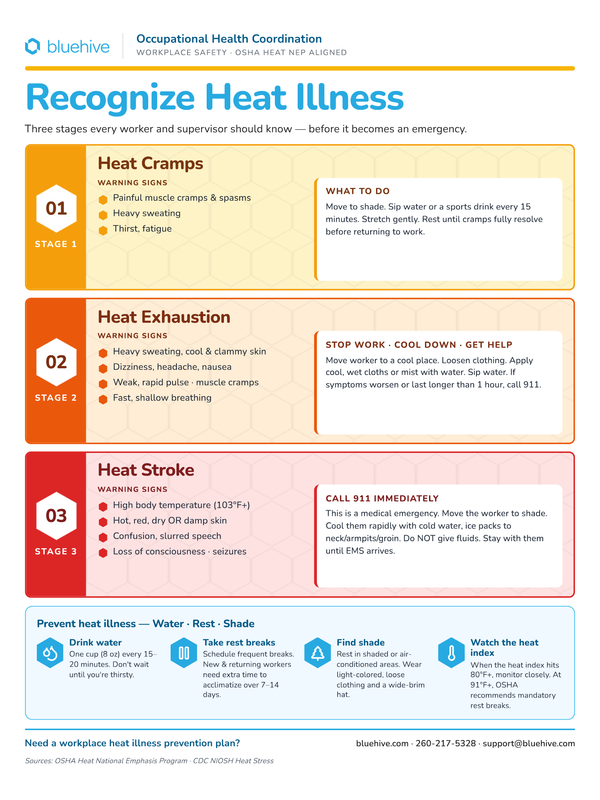
Heat Illness Recognition Poster
Spot heat cramps, exhaustion, and stroke fast — a break-room poster aligned to the OSHA Heat NEP.
1 page · portraitOpen
Grab every PDF in this category as a single .zip — 18 documents.
Wall posters for break rooms, locker rooms, and jobsites — OSHA-aligned hazard awareness.
Safety PostersSpot heat cramps, exhaustion, and stroke fast — a break-room poster aligned to the OSHA Heat NEP.
 Safety Posters
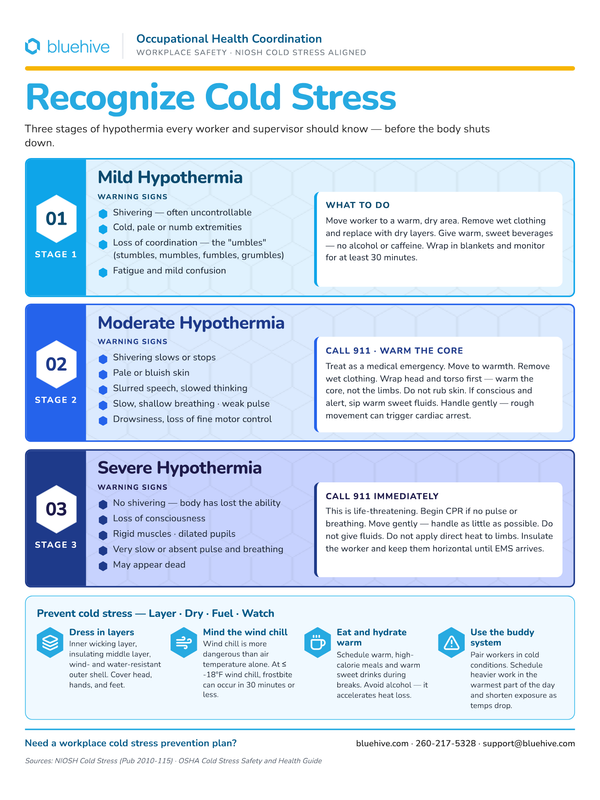
Spot mild, moderate, and severe hypothermia fast — a break-room poster aligned to NIOSH cold stress guidance.
 Safety Posters
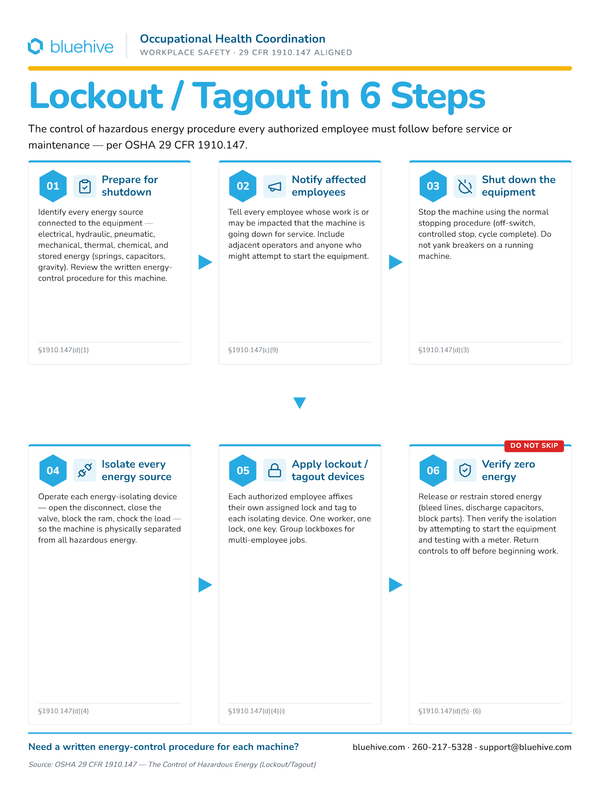
The six-step OSHA hazardous energy control procedure on one wall — for maintenance bays, control rooms, and authorized-employee training boards.
 Safety Posters
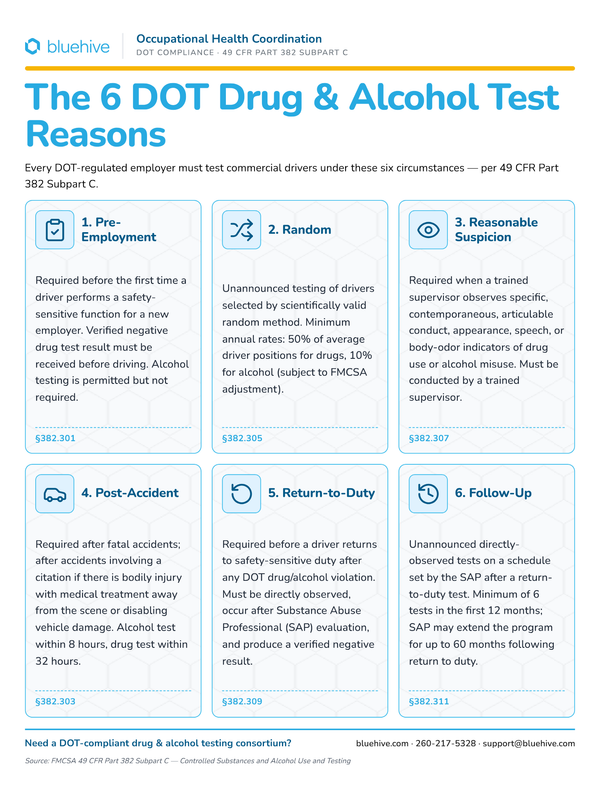
The six DOT-mandated testing circumstances for commercial drivers — a one-page wall reference for dispatch, terminals, and DER offices.
 Safety Posters
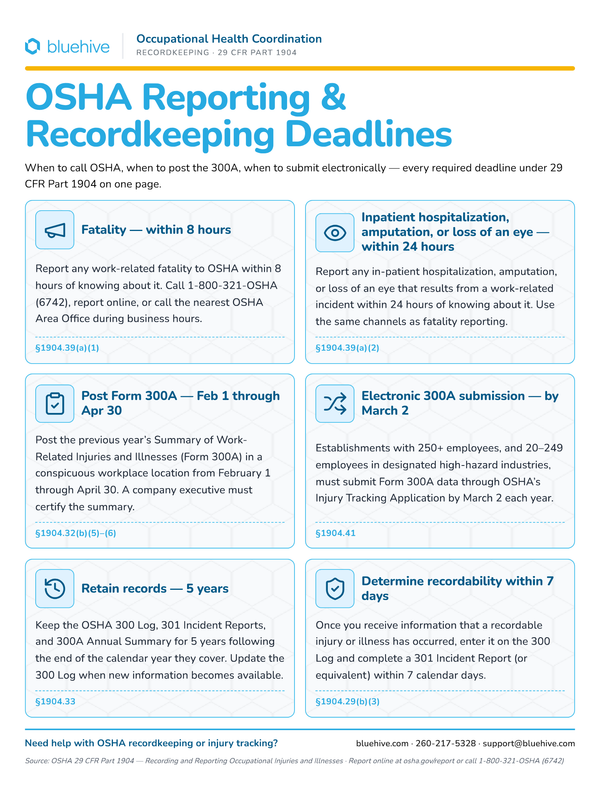
Every OSHA injury reporting and recordkeeping deadline under 29 CFR Part 1904 on one page — 8-hour fatality, 24-hour hospitalization, 300A posting window, ITA submission, and 5-year retention.
 Safety Posters
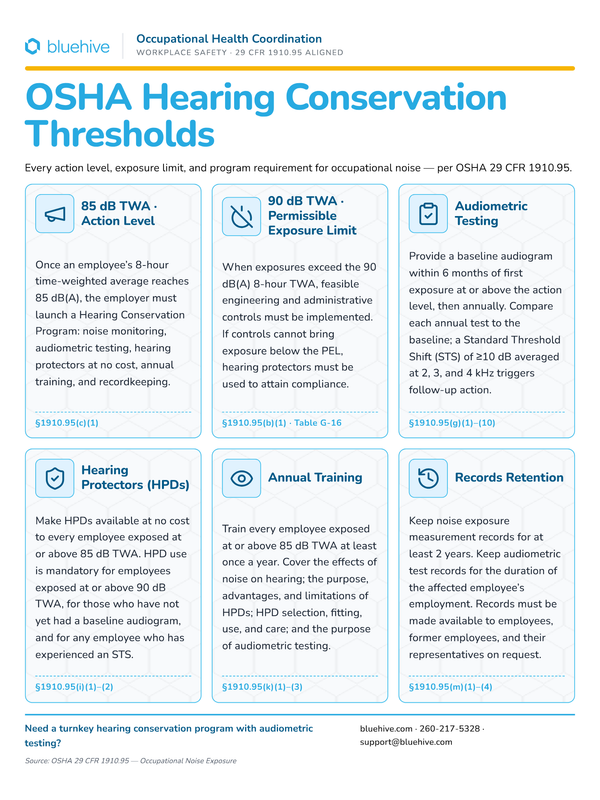
Every action level, exposure limit, and program requirement for occupational noise on one page — 85 dB action level, 90 dB PEL, audiometric testing, HPDs, training, and records retention per 29 CFR 1910.95.
 Safety Posters
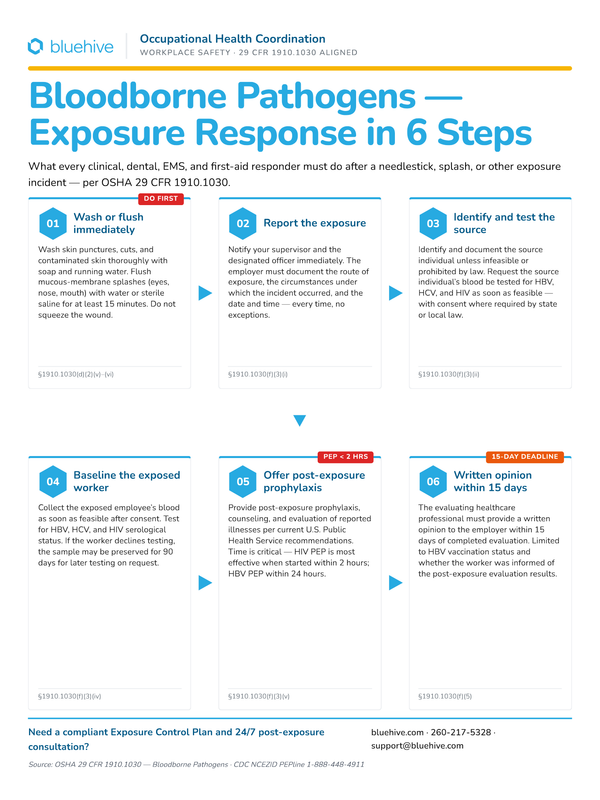
The 6 steps every clinical, dental, EMS, and first-aid responder must take after a needlestick, splash, or other exposure incident — per 29 CFR 1910.1030.
 Safety Posters
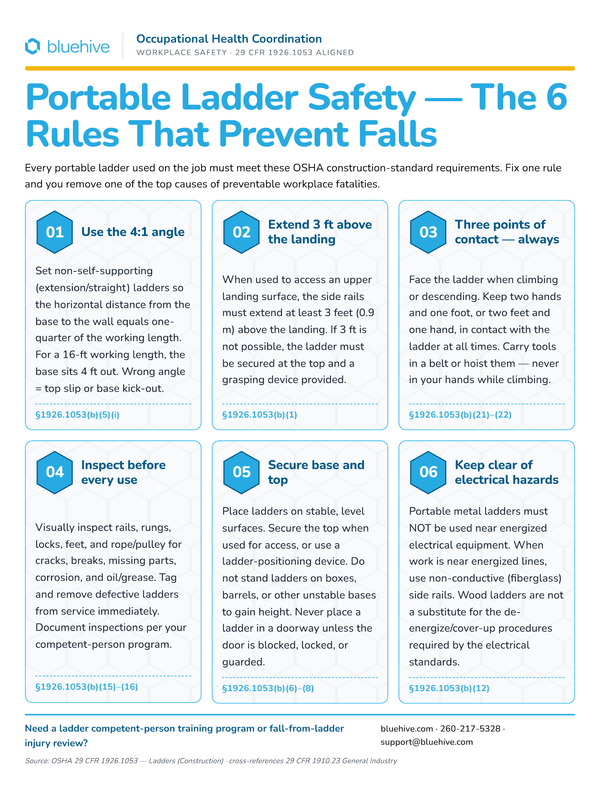
The 6 portable-ladder rules every construction and maintenance worker must follow, anchored to 29 CFR 1926.1053 — including the 4:1 angle, 3-ft extension above the landing, three points of contact, inspection, base/top securing, and electrical clearance.
 Safety Posters
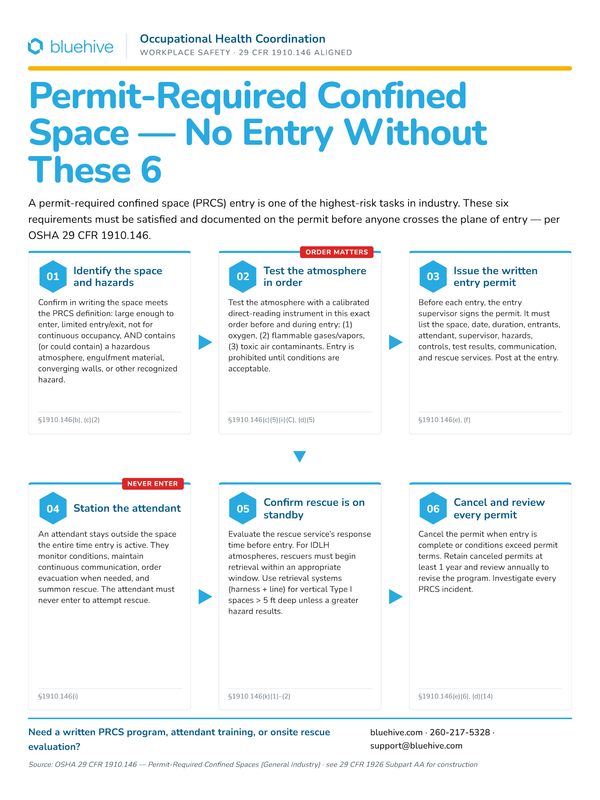
The 6 requirements that must be satisfied and documented on the entry permit before any worker crosses the plane of a permit-required confined space — per 29 CFR 1910.146.
 Safety Posters
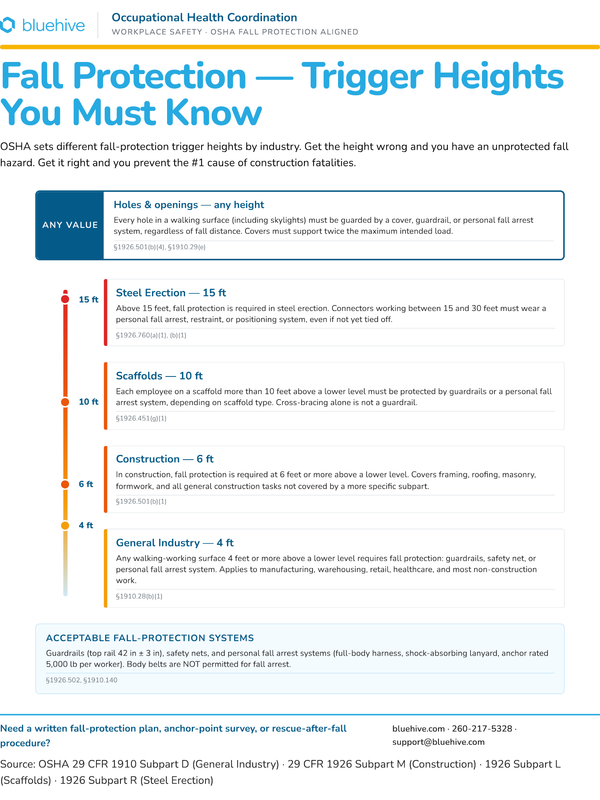
The 6 OSHA fall-protection trigger heights every employer must know — 4 ft general industry, 6 ft construction, 10 ft scaffolds, 15 ft steel erection, any-height holes/openings, and the required systems (guardrails, nets, PFAS).
 Safety Posters
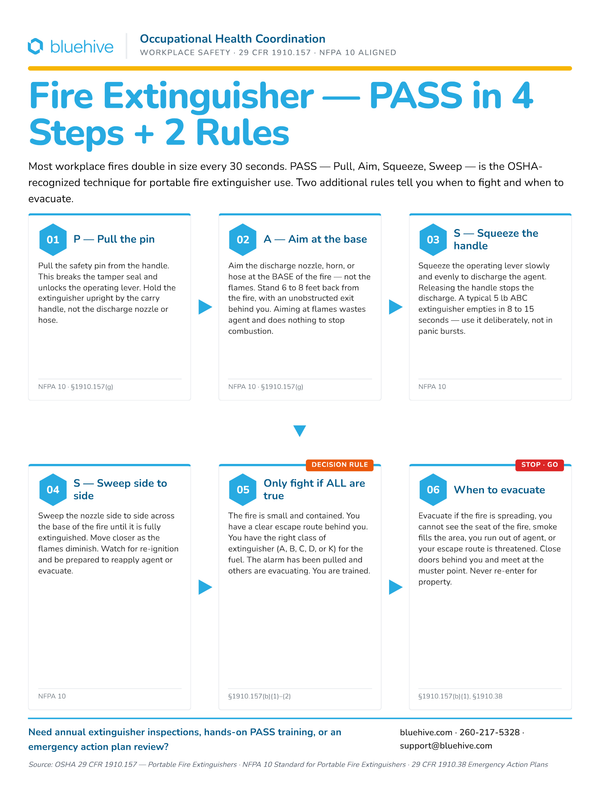
The OSHA-recognized PASS technique — Pull, Aim, Squeeze, Sweep — plus the two rules that tell you when to fight a fire and when to evacuate. Anchored to 29 CFR 1910.157 and NFPA 10.
 Safety Posters
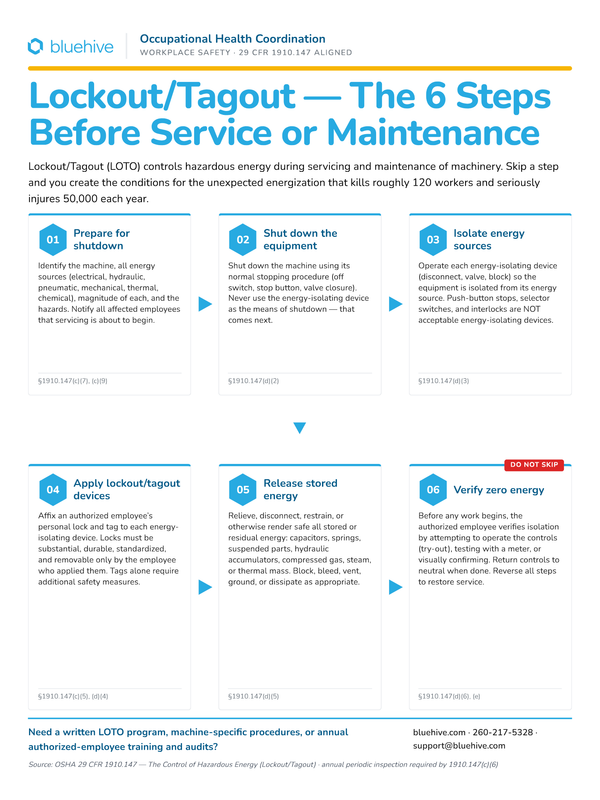
The 6 OSHA-required Lockout/Tagout steps before any servicing or maintenance — prepare, shut down, isolate, apply LOTO devices, release stored energy, and verify zero energy. Anchored to 29 CFR 1910.147.
 Safety Posters
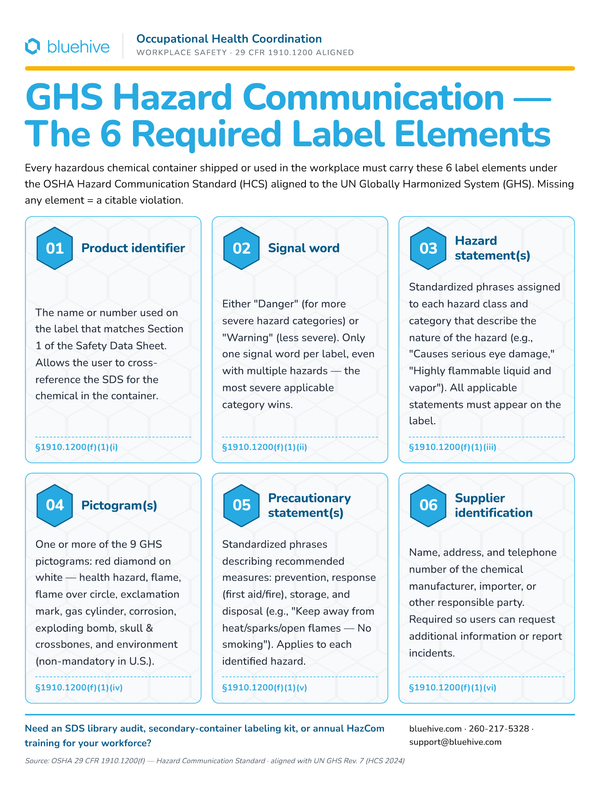
The 6 required label elements on every hazardous-chemical container under OSHA 29 CFR 1910.1200(f) — product identifier, signal word, hazard statements, pictograms, precautionary statements, and supplier ID.
 Safety Posters
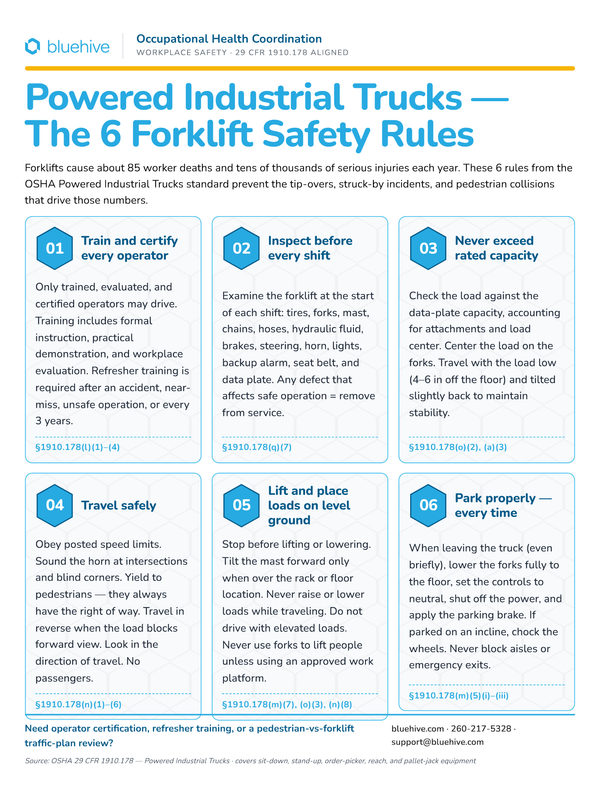
The 6 OSHA Powered Industrial Truck safety rules — train and certify operators, pre-shift inspection, never exceed capacity, travel rules, lift/place on level ground, and proper parking. Anchored to 29 CFR 1910.178.
 Safety Posters
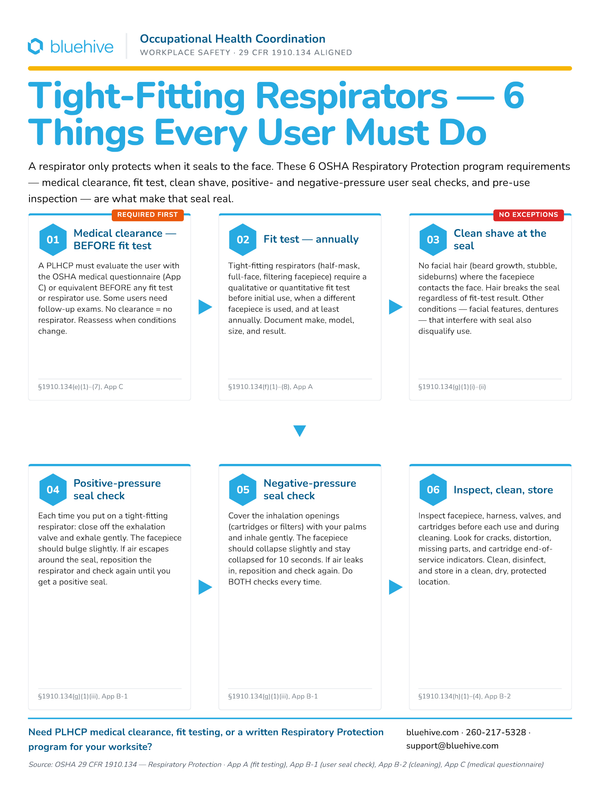
The 6 OSHA Respiratory Protection program requirements for tight-fitting respirators — medical clearance before fit test, annual fit test, clean-shave seal, positive- and negative-pressure user seal checks, and inspect/clean/store. Anchored to 29 CFR 1910.134.
 Safety Posters
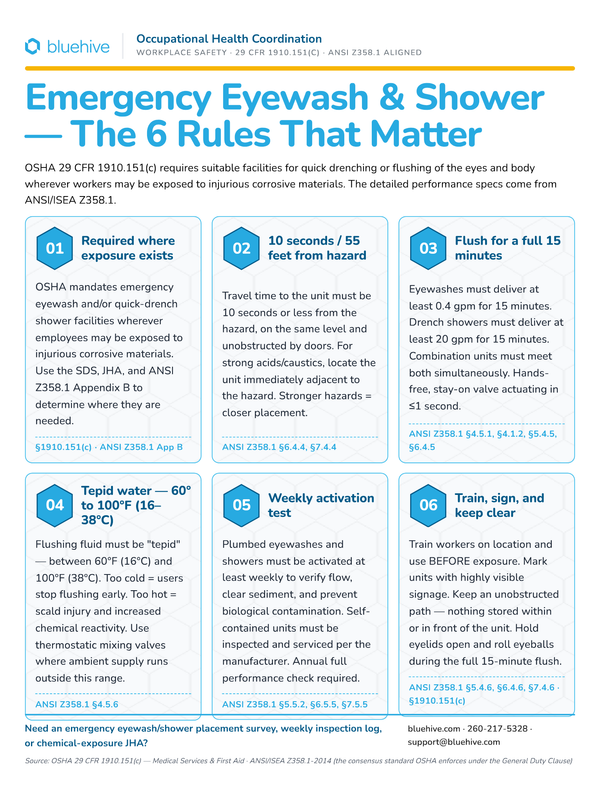
The 6 OSHA-enforceable emergency eyewash/shower rules — when required, 10-second/55-ft travel rule, 15-minute flush flow rates, tepid 60–100°F water, weekly activation test, and signage/training. Anchored to 29 CFR 1910.151(c) and ANSI/ISEA Z358.1-2014.
 Safety Posters
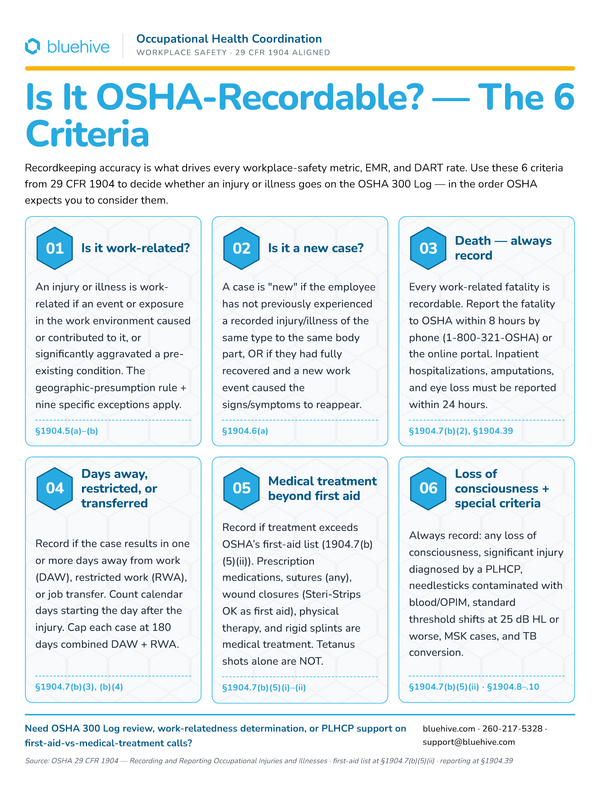
The 6 OSHA-defined criteria that determine whether an injury or illness goes on the OSHA 300 Log — work-relatedness, new case, death, days-away/restricted/transferred, medical treatment beyond first aid, and special recording criteria. Anchored to 29 CFR 1904.
 Safety Posters
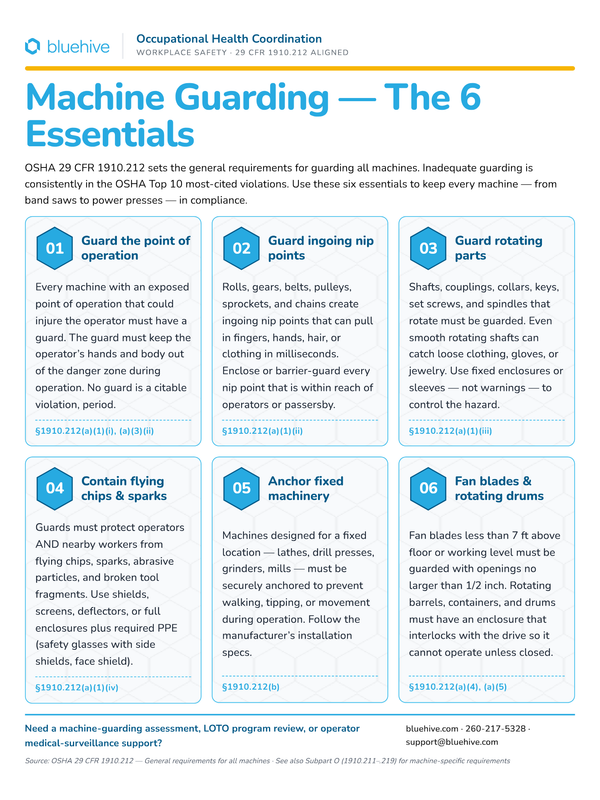
The 6 OSHA machine-guarding essentials from 29 CFR 1910.212 — point of operation, ingoing nip points, rotating parts, flying chips/sparks, anchoring, and fan/drum guards. A single-page reference for any shop floor where machinery operates.
Tell us what your front desk or HR office is missing. We’ll add it to the queue and ship it as a free download.