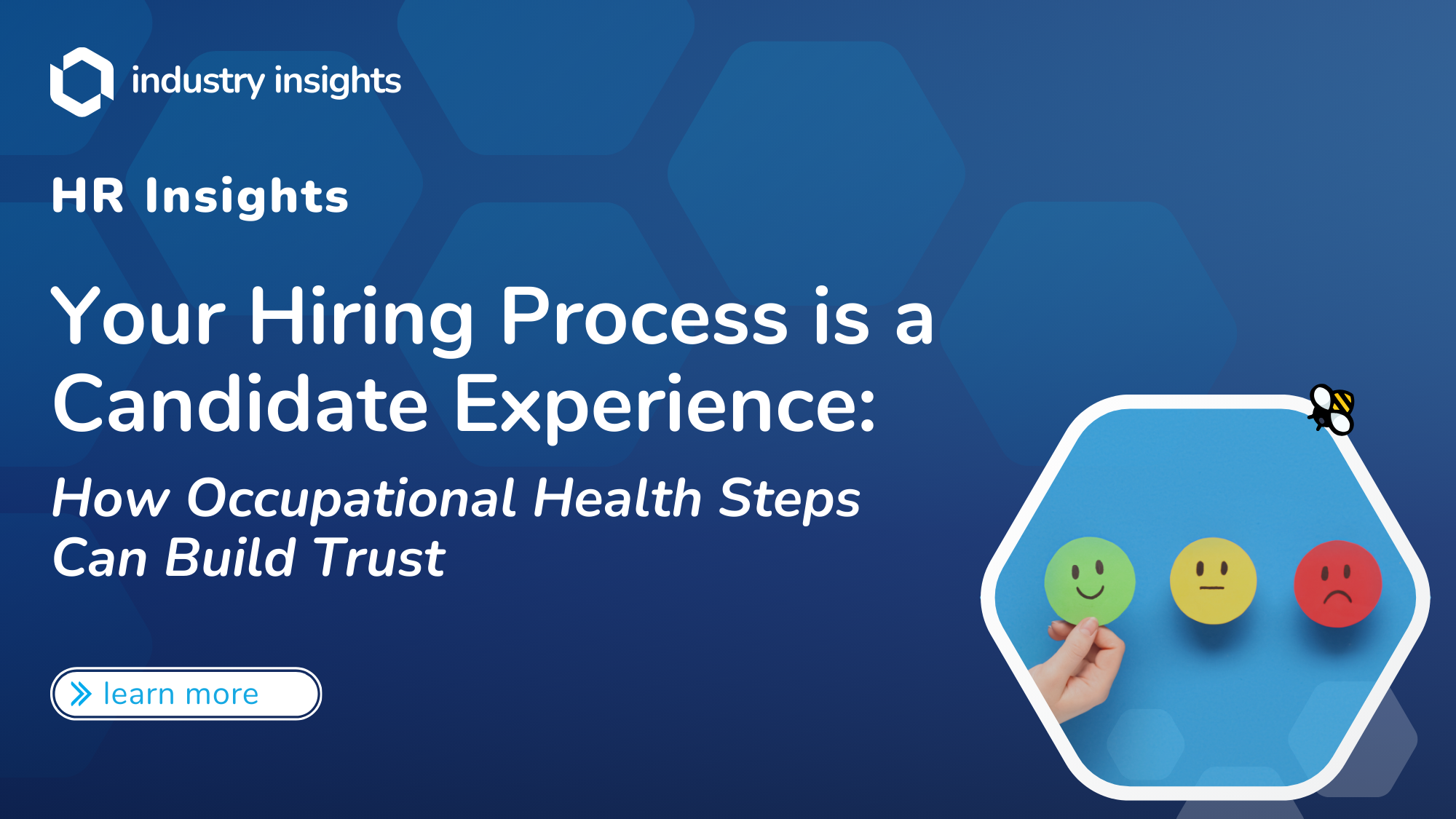

Recruiting in today’s market is fiercely competitive, and small inefficiencies can make a big difference in hiring outcomes. One often-overlooked area is the pre-employment occupational health process – steps like drug tests, physical exams, and immunization checks that are typically seen as mere compliance hurdles. This white paper argues that by streamlining and improving the candidate experience during these health screening steps, HR teams can turn occupational health from a bureaucratic obligation into a strategic hiring advantage. Key insights include:
- Hidden Drop-Off Risk: Candidates frequently drop off late in the hiring process due to slow or cumbersome health screening workflows. In fact, the number one reason candidates abandon an offer is a hiring process that drags on too long [1]. A silent, multi-day wait for a drug test or background check is often the final straw that drives top talent to accept other offers [2].
- Impact on Time-to-Hire and Productivity: Every day a position remains unfilled due to screening delays is a day of lost productivity and increased cost. Industries like healthcare, manufacturing, and transportation know that extended vacancies hurt the bottom line [3].
- Candidate Experience is Key: Occupational health requirements are one of the last touchpoints candidates have before their first day. A poor experience here – convoluted scheduling, poor communication, long waits with no updates – can sour a candidate’s perception of the company. Conversely, a fast and empathetic screening process shows respect for the candidate’s time and reduces anxiety [4].
- Tactical Improvements: HR leaders can take concrete steps to improve each aspect of the pre-hire health workflow. This includes offering flexible scheduling options (e.g. online self-scheduling with expanded clinic hours), proactive communication and transparency about next steps, diligent follow-up to prevent delays, and better clinic coordination through provider networks or technology platforms.
Bottom line: By treating occupational health as an integral part of the candidate experience – not just a compliance box to tick – organizations can reduce drop-off, accelerate time-to-hire, and differentiate themselves in the talent market. A smoother health screening process protects your hires and your hiring pipeline, turning a traditional pain point into a hiring advantage.
Download the Whitepaper
From Compliance Check to Strategic Advantage
Historically, pre-employment health screenings have been viewed as a necessary inconvenience – a final compliance checkpoint before a new hire can start work. Drug tests, medical exams, and vaccination checks are often handled in a perfunctory way, with little thought to the candidate’s experience. However, this mindset is shifting. Forward-thinking HR leaders recognize that every interaction in the hiring journey affects candidate sentiment, and the occupational health step is no exception. If handled poorly, it can derail an otherwise positive hiring process; if handled well, it can become a competitive differentiator.
The stakes are high: a slow or disorganized health screening sends a message of disorganization and disrespect for the candidate’s time [2]. Candidates who have already accepted an offer may begin to question their decision when faced with confusing instructions, inconvenient appointments, or long periods of silence waiting for results. Research shows that a “sudden, silent pause” during final hiring stages – like waiting on a background check or drug test – kills candidate momentum and often leads to drop-off[5]. In one survey, 73% of candidates said they would abandon a job application that takes too long [6], a finding that applies just as much to post-offer onboarding steps. Simply put, speed matters: hiring processes that move in days instead of weeks secure talent before the competition can [7] [8].
On the flip side, a well-managed occupational health process can reinforce a positive employer brand. Candidates interpret a smooth screening experience as a sign of an organized, caring employer. For example, drug testing is often framed as just a compliance hurdle, but it’s also a “candidate experience moment” that communicates how an employer values a new hire’s time and convenience [4]. Showing consideration – like offering flexible scheduling or providing clear guidance – signals to the candidate that the organization is empathetic and competent. This not only prevents drop-off but builds goodwill; candidates who feel respected and supported are more likely to start their new job with enthusiasm.
In short, organizations that reframe occupational health as a strategic part of hiring stand to gain a hiring advantage. By ensuring this stage is fast, transparent, and candidate-centric, HR can protect hard-won offer acceptances and even use the experience to differentiate their company. The following sections will delve into where common pain points arise in pre-employment health workflows and provide tactical guidance on transforming these “last mile” hiring steps into a positive experience.
Where Friction Occurs in Occupational Health Workflows
Even companies with strong recruiting and interviewing processes often stumble during post-offer health screening. It’s at this juncture – after the offer is accepted, but before day one – that friction in occupational health requirements can cause candidate frustration or drop-off. Below, we examine common problem areas, supported by data on their impact:
- Scheduling Bottlenecks: One of the biggest hurdles is simply getting the candidate scheduled for required exams or tests promptly. Many occupational health clinics operate on limited weekday hours, and appointments book up fast. If a candidate has to wait a week to get a drug test or cannot find a convenient time, momentum is lost. Inflexible time slots and long wait times at testing centers often lead to candidate frustration and no-shows [9]. In other words, the delay isn’t usually due to the candidate’s reluctance – it’s the logistical barrier. Every missed or rescheduled appointment pushes out the start date, extending time-to-hire and increasing the chance the candidate walks away. Especially in industries with mandated testing windows (e.g. federal DOT drug test requirements), failing to accommodate a candidate’s schedule can result in compliance breaches or losing the hire altogether [10].
- Communication Gaps and “Black Holes”: Lack of communication during the screening stage is a top complaint from candidates. After a candidate submits to a background check or medical exam, they often encounter a silence – no updates on progress or next steps. This “black hole” effect is a known momentum-killer [11]. Candidates may feel forgotten or begin to question if something is wrong. In one UK study, 87.5% of candidates cited communication issues as the primary reason they dropped out of a hiring process [12]. A common scenario is the candidate who has done their drug test and then hears nothing for a week. Feeling disrespected and uncertain, the candidate grows disenchanted. Consistent communication is crucial to reassure candidates that things are on track and to remind them that the company still values them. Without it, even a short necessary wait can lead to disengagement. As one industry expert put it, “The biggest momentum killer is silence” [13].
- Long Turnaround Times: Even once the candidate completes their screening, lengthy processing times for results can introduce friction. Lab results for drug screens or titers for immunizations might take several days or more. If an HR team or staffing firm takes a “hands-off” approach – simply telling the candidate “we’ll be in touch when we hear back” – the candidate is left in limbo. Studies confirm that the longer a candidate waits for final clearance, the likelier they are to accept another job offer [14]. Top talent often has options, and they won’t remain idle for too long. Nearly half of candidates (in a healthcare recruiting study) encountered hiring delays over 20 days, which resulted in many of them being snatched up by faster-moving competitors [15]. This illustrates how vulnerable the post-offer period is; a drawn-out health screening can cost you an otherwise enthusiastic new hire.
- Complex or Confusing Processes: Occupational health requirements can be complex – multiple exams, forms, or steps – and if not coordinated well, they confuse and frustrate candidates. For example, a healthcare hire might need to provide immunization records, get a TB skin test, and complete a physical exam. If the instructions for these are unclear, or if the candidate has to figure out on their own how to get each item done, it creates stress. Poor instructions or disjointed processes contribute to a poor candidate experience, which is a major factor in drop-offs [16]. Candidates may perceive the employer as disorganized if, say, they are sent to one clinic for a drug test but then separately told to find a provider for a physical. Each additional step that isn’t seamlessly managed is another chance for the candidate to bow out or make a mistake. A lack of clarity on what exactly is required and by when can also lead to inadvertent non-compliance (e.g., a candidate misses a required vaccine). One staggering statistic: about one-third of healthcare job candidates report a negative hiring experience overall, and two-thirds are neutral or dissatisfied [17] – in large part due to complicated, drawn-out processes like these.
- Geographical and Timing Constraints: Especially in industries like healthcare, construction, or oil & gas, candidates and jobs may be in various locations, including rural areas. A candidate might live far from the nearest approved clinic or have to travel to job sites. If an employer’s occupational health process doesn’t account for geography, it can become a roadblock. For instance, critical access hospitals (rural healthcare facilities) often struggle because their new hires must complete clearances and certifications, yet the remote location means limited provider options and greater scheduling difficulty [18]. Without special accommodation (like arranging clinics closer to the candidate or mobile screening services), these hires face delays. Timing is another factor – candidates coming from other jobs might only be free after hours or on weekends. A rigid, 9-to-5-only screening process effectively excludes those candidates unless they take time off work, which not everyone can afford to do. Such constraints, if unaddressed, reduce completion rates of screenings [19] [9] and can force candidates to drop out for practical reasons unrelated to their willingness or qualifications.
The Data on Drop-Off: All these friction points have measurable consequences. Across industries, slow hiring processes directly correlate with higher candidate abandonment. A multi-industry analysis identified that the #1 reason for candidate drop-off is that the process took too long [2]. In particular, the final screening stage is singled out as the moment many candidates vanish, despite having come so far [20]. Candidates often interpret delays as a sign of disorganization or lack of respect, prompting them to pursue other opportunities [2]. Given that the average time-to-hire can be over 40 days in some sectors [21], there is ample room to reduce delays in the health screening subset of that timeline. Moreover, the cost of losing candidates at this stage is high: employers must reopen requisitions, re-start recruiting, or settle for their second-choice candidates – all while projects or services remain short-staffed. For staffing agencies, candidate drop-offs can even risk client relationships and revenue, as they scramble to replace candidates who ghost during onboarding [22]. In summary, friction in occupational health workflows isn’t just a minor inconvenience – it’s a significant weak link in hiring that can undermine all the effort spent on attracting and interviewing talent.
Tactical Guidance: Improving the Candidate Experience in Health Screening
To turn occupational health from a pain point into a competitive strength, organizations need to attack the problem on multiple fronts. The goal is twofold: reduce the actual time and effort required to clear a candidate medically, and improve the candidate’s perception and comfort throughout the process. Below are practical, tactical steps – centered on scheduling, communication, follow-up, and clinic coordination – that HR teams can implement for a faster, friendlier pre-employment health screening experience. These recommendations emphasize the principles of speed, clarity, empathy, and consistency.
Streamline and Speed Up Scheduling
Make it easy and quick for candidates to complete required tests. Scheduling should be as frictionless as possible:
- Offer Flexible Appointment Options: Rigid, 9–5 scheduling windows are a common culprit in delays. Expand options by partnering with clinics that have extended hours or weekend availability. Better yet, use scheduling technology that allows candidates to choose from multiple locations and times. By broadening access points (more clinics, longer hours), you accommodate candidates with busy schedules [19] [9]. Flexible scheduling shows empathy for candidates’ other commitments and directly leads to higher completion rates [9].
- Online Self-Scheduling: Empower candidates to book their own appointments through an online portal or link. This reduces back-and-forth emails or calls. Many modern occupational health platforms (and clinics) support self-service scheduling. A mobile-friendly scheduling interface is crucial – candidates should be able to pick a time and place on their phone in minutes, rather than playing phone tag with a clinic. Self-scheduling also gives candidates a sense of control and transparency (they can often see the soonest available slot).
- Pre-Book Appointments at Offer Time: A proactive strategy is to schedule required health services at the moment of offer acceptance. For example, when a candidate says “Yes” to an offer, the recruiter or HR coordinator immediately helps them set up their drug test/physical for the earliest possible date (even the next day if feasible) [23]. This removes the lag between offer and action. One best practice is to keep tentative appointment slots on hold with your clinic partners for new hires, so you’re never waiting a week or more. Pre-scheduling appointments conveys urgency and importance – it tells the candidate and the hiring managers that this step is a priority, not an afterthought.
- Leverage Provider Networks: If your organization operates across multiple regions or hires remotely, consider using a nationwide provider network to locate clinics near your candidates. Rather than limiting candidates to one pre-selected clinic (that might be far away or booked up), a network can offer choices for convenience. Partnering with a broad network of accredited providers ensures candidates can find a nearby location, reducing travel time and delays [24]. For instance, BlueHive connects employers to 22,000+ occupational health providers nationwide, so a new hire can quickly find a clinic close to home or work, even for specialized tests [25]. This extensive network approach cuts down the scheduling conflicts that arise when everyone is funneled to a single facility.
- Fast-Track Results Where Possible: Another aspect of scheduling is choosing options that yield faster results. If offered a choice between a standard lab test that takes 3-5 days vs. a rapid test with 24-48 hour turnaround, opting for the faster method (when legally and medically acceptable) can shave days off the process [26]. Many providers now offer rapid drug screens or instant result options – use them strategically for roles where time is critical. The slightly higher cost of an expedited test often pays for itself by securing the hire sooner.
By engineering your scheduling process around flexibility and speed, you remove one of the biggest barriers in occupational health. A candidate who can complete all their requirements within a day or two of accepting the offer is far less likely to lose interest or be poached by another employer. Moreover, such efficiency demonstrates organizational competence. As one HR technology provider observed, transforming a once week-long screening ordeal into a 1–3 day integrated process can dramatically reduce drop-offs and protect your hiring investment [7].
Communicate with Clarity and Empathy
Transparent, frequent communication is the antidote to candidate anxiety during the health screening stage. HR teams should treat this period as an extension of the recruitment experience – keeping the candidate informed, setting expectations, and conveying support:
Provide Step-by-Step Instructions: As soon as the offer is accepted (or even as part of the offer packet), give the candidate a clear checklist or guide covering all required health steps. Detail what each screening entails, approximate time required, any documents they need to bring (ID, immunization records, etc.), and deadlines if applicable. For example, if a physical exam and a drug test are needed, specify if these are separate appointments or if they can be done together, and by when they should be completed. When candidates know exactly what to do and why, they are more likely to follow through quickly [23]. Clarity here shows respect – it says “we value your time and want to make this easy for you.” Avoid jargon and explain the purpose of each requirement in plain language (e.g. “We require a basic physical to ensure you can safely perform the job duties. This is standard for all new hires in this role.”). Such clarity prevents confusion and errors, like a candidate accidentally skipping an important lab test.
- Set Expectations on Timeline: Be upfront about how long each step might take and what the overall timeline looks like. For instance, “After you complete the drug test, results typically take 2 business days to reach us. Once we have all results and everything is clear, we will confirm your start date.” If there’s an internal process (like an internal medical review of the exam), let them know. It’s also helpful to tell candidates whom to contact if they have questions at any point – give them a name/number of an HR coordinator or a helpline. When candidates know what to expect, they feel more in control and less anxious during the wait.
- Maintain a Human, Empathetic Tone: While being efficient, don’t slip into an overly clinical or bureaucratic tone in communications. Remember, many candidates might be nervous about drug tests or medical exams (even those with nothing to hide can feel anxious about the process). Frame your messaging with empathy: express that these steps are important but you understand they can be inconvenient or stressful, and the company appreciates the candidate’s effort in completing them. For example, an email could say, “We know scheduling a medical appointment during a busy week can be challenging. If you have any trouble finding a convenient time, let us know and we’ll assist.” By acknowledging the candidate’s perspective, you build goodwill. Empathetic communication is part of treating the candidate as a valued individual, not just an item on a checklist.
- Regular Updates – No News is News: Don’t let a candidate disappear into a communication void after they’ve done their part. Even if there’s a waiting period (e.g., “pending results”), send interim updates to reassure them. A quick update like, “Hi ___, just letting you know we haven’t received the lab results yet, but this is normal – it usually takes a couple of days. We’ll follow up by Friday,” can significantly reduce the candidate’s uncertainty. Consistent communication is so impactful that it’s cited as a top way to prevent drop-offs [12] [27]. One best practice is to schedule a check-in touchpoint every few days between offer and start date – even if it’s just a friendly note. This consistency prevents the “Did they forget about me?” syndrome. It’s especially vital in the final stretch: after all screenings are done but before day one, maintain contact. Many candidates who ghost or drop off after accepting an offer do so because they felt the employer lost interest post-offer [28]. Don’t let silence be the reason a new hire gets cold feet.
- Transparent Problem-Solving: If any issue arises – say a drug test result is delayed longer than expected, or an exam uncovers a follow-up needed – inform the candidate promptly and explain the plan to resolve it. For example, “The lab is taking a bit longer with one of your test results. This sometimes happens due to confirmatory testing. We expect an update by Monday and will keep you posted. Let us know if you have any concerns in the meantime.” Candidates are generally understanding if kept in the loop; it’s being left in the dark that frustrates them. Transparency builds trust. Even if the news is that something will take longer, hearing it directly from the employer (versus the candidate having to chase for info) demonstrates that you’re on top of things.
In summary, communication should be proactive, clear, and kind. A candidate should never have to wonder what’s happening or whom to contact. By providing consistent updates and guidance, you eliminate the uncertainty that often drives candidates away during this stage [11]. The investment in good communication is minimal (often just a few extra emails or texts), but the payoff is huge in keeping candidates engaged and confident in their decision to join your company.
Proactive Follow-Up and Consistent Support
Even with good initial communication, HR needs to actively manage the follow-through of each candidate’s occupational health tasks. Assume that without gentle intervention, delays could occur – so build in processes to catch and address them quickly. Here’s how to ensure no candidate falls through the cracks:
- Monitor Completion Status in Real-Time: It’s not enough to send a candidate off to get a screening and then forget about it until the start date. HR or your onboarding coordinators should have a system (even a simple spreadsheet or an automated dashboard) to track each required item and its status. Many screening platforms now offer real-time status updates – for example, you can see when a drug test is collected, when it’s in lab processing, and when results are ready [29]. Leverage these tools so that you know immediately if something is delayed or if a candidate hasn’t yet completed an assigned task. For instance, if a candidate hasn’t booked their appointment within 48 hours of receiving instructions, that should trigger a follow-up call to offer help. By tracking in real-time, you can be proactive rather than reactive.
- Send Reminders and Follow-Ups: People get busy and forget – especially candidates who might be juggling a transition from a previous job. Don’t assume lack of action is willful; often a polite nudge is all that’s needed. Set up automated reminders for pending items. For example, if a candidate’s required drug screen isn’t completed within 3 days of the offer, an email or text reminder can go out: “Friendly reminder: please complete your drug test by Friday. Let us know if you need assistance scheduling.” These reminders underscore the importance of the task and provide consistency. Many candidates actually appreciate the structure (it helps them keep track of what they need to do). However, balance automation with a human touch – if multiple reminders have gone out and there’s still no action, a personal phone call is warranted to check in, see if there’s an obstacle, and reiterate your support.
- Provide Consistent Points of Contact: Ensure the candidate knows who is coordinating their onboarding and that they can reach out anytime. It could be a specific HR specialist or a recruiter staying with them through onboarding. Consistency matters – hearing from the same person or team provides continuity. It prevents the scenario where a candidate emails a question and it falls into a void or gets bounced around departments. If you have a dedicated onboarding coordinator, introduce them to the candidate as soon as the offer is signed. That coordinator can then be the “go-to” for any follow-up. This consistency also helps catch issues: the coordinator will notice if, say, a candidate seems hesitant or confused about a requirement and can step in to clarify or reassure.
- Address Problems Quickly and Empathetically: If a candidate hits a snag (e.g., can’t get an appointment until next week, lost paperwork, tested positive for antibodies instead of vaccination records, etc.), work with them on a solution without delay. Show that you are equally invested in getting them cleared and started. For instance, if the soonest clinic appointment is in 10 days, perhaps find an alternative clinic through another provider network, or if permissible, consider having them start with contingencies (depending on the role and legal allowances). Each day matters, so creativity and flexibility in resolving issues are key. Importantly, communicate your plan to the candidate and ensure they’re comfortable with it. This level of support demonstrates empathy – you’re not blaming them or leaving them alone to figure it out; you’re partnering to overcome the hurdle.
- Consistency in Process: Standardize your occupational health onboarding steps as much as possible. A consistent process (checklists, templates for communications, set timelines) ensures no one gets forgotten. It also means you can communicate confidently what will happen next because it’s the same for every hire (with minor variations by role). For example, if you consistently schedule the drug test within 24 hours and aim to have results in 48 hours, make that your SOP (standard operating procedure). Candidates talk – especially in the age of online reviews – and having a consistent, smooth process builds a positive reputation. Internally, consistency allows you to measure and improve. Track metrics like screening turnaround time for each step; if one clinic partner is consistently slow or one step often causes delays, you’ll spot it and can take corrective action [30]. By benchmarking your process against industry standards, you can continually refine it to stay efficient [31].
In essence, proactive follow-up and consistency are about project managing the candidate’s journey to Day 1. HR should treat the period between offer and start as a critical phase where active management is required – not assume that “the candidate will handle it.” This attentive approach reduces drop-offs and surprises. It also reassures the candidate that the company is well-organized and truly cares about getting them on board. When candidates see the employer putting in effort to guide them through the final steps, it reinforces that they made the right choice.
Coordinating with Clinics and Leveraging Provider Networks
Behind the scenes, much of the delay and frustration in occupational health processes comes from the interface between employers and healthcare providers (clinics, labs, etc.). Improving how you coordinate with service providers can dramatically improve speed and consistency. HR teams should build strong relationships and use technology where possible to streamline these interactions:
- Establish Preferred Providers: Rather than finding a clinic on the fly for each new hire, establish relationships with one or more occupational health providers (or services like BlueHive that aggregate providers). When you have a preferred clinic network, you can often negotiate faster service level agreements, priority scheduling, or at least clear lines of communication. For example, a large manufacturing company might partner with a local urgent care chain for pre-hire physicals and drug tests, ensuring that their candidates can be seen within 24-48 hours of calling. Preferred providers may also offer direct billing, standardized report formats, and other conveniences that reduce administrative steps for HR. The key is reliability and familiarity – the clinic knows your company’s typical needs and you know what to expect from the clinic.
- Utilize Technology Integration: Wherever possible, use systems that integrate your hiring process with the provider’s processes. Many modern HR platforms or specialized occupational health platforms allow you to order screenings and receive results electronically. Instead of faxing paperwork back and forth or having candidates drop off forms, an integrated system can send the candidate’s info and required services to the clinic digitally, and you get results back in a secure online portal. Automation reduces human error (no lost faxes or misfiled forms) and speeds up results delivery [29]. Additionally, integrated systems can trigger those real-time status updates – e.g., you get a notification when the drug test is completed or when lab results are posted – so you’re not left waiting for someone to call you.
- Expand the Provider Network for Dispersed Workforce: If you hire in many locations, ensure your solution covers nationwide (or region-wide) coverage. As discussed earlier, a broad network is crucial for accommodating candidates wherever they are. BlueHive’s model, for instance, is to provide access to thousands of providers and over 100 types of services through one platform [25]. This kind of reach means even if you suddenly hire someone two states away, you don’t have to scramble to find a clinic – your network likely has one. The convenience for the candidate is significant: they can choose a nearby provider, which reduces travel and time off work, and thus reduces drop-off likelihood. For the HR team, having a one-stop provider network simplifies coordination – one contact (or system) to deal with instead of calling random clinics.
- Ensure Providers Understand Urgency: Communicate to your partner clinics that time is of the essence for your hires. While clinics have their processes, if they understand that your company values quick turnaround, they might expedite scheduling or processing when possible. Some providers offer “priority” service for an added fee – for critical roles, this might be worth it. Also, ask providers about rapid testing options: for instance, on-site rapid drug screens (with lab confirmation only if needed) or instant antibody tests for certain immunizations. Using expedited options can cut waiting time. A survey of providers might reveal services you weren’t using that could speed things up (like mobile units that come to your facility for group hiring events, etc.).
- Coordinate Multiple Requirements in One Go: When feasible, try to bundle medical requirements so the candidate can do everything in one visit. If they need a physical and a drug screen, see if a single clinic can do both in the same appointment. If immunizations are required and the candidate doesn’t have proof, arrange for them to get the shots at the same time as the physical. Each extra trip you save the candidate is a win. It requires coordination (ensuring the clinic is instructed properly on all that’s needed), but it greatly improves the candidate experience and reduces total throughput time. A one-stop approach – where the candidate walks out of a clinic with all boxes checked – is ideal. Make sure your clinic partners know all the services you might request; many occupational health clinics offer comprehensive “new hire panels” that include multiple tests and exams in a single session.
- Keep Records and Certificates Organized: Once results come in, close the loop efficiently. Have a system for storing medical clearance documents (drug test results, physical exam reports, vaccination proofs) so that the candidate does not have to provide anything twice. For example, if hiring for a temporary staffing pool, maintain records of candidates’ completed health screens so that if they get re-assigned within a certain timeframe, you can re-use those results if still valid. Efficient record-keeping also matters for compliance (you might need to show auditors that all employees had required clearances). A centralized, secure repository – ideally tied to your HRIS or onboarding system – prevents lost paperwork and last-minute scrambles. Platforms like BlueHive offer secure, centralized management of all health records and documentation, making it easy to verify compliance status at a glance [32] [33].
- Feedback Loop with Providers: Treat your relationship with screening providers as ongoing. If there were issues (e.g., a candidate had a poor experience at a clinic, or results were consistently slow from a lab), feed that back to the provider account manager. Work together on improvements – good providers will value the partnership and try to resolve issues (like retraining staff on customer service, or adjusting processes to meet your needs). Similarly, if you find a particular provider location gives excellent service to your candidates, lean into that – funnel more people there or commend them, which can further motivate good service. Essentially, bring providers into your mission of enhancing candidate experience. When they see themselves as an extension of your hiring team, they are more likely to deliver service that aligns with your values (speed, courtesy, etc.).
By tightening the coordination with clinics and utilizing robust networks, you remove much of the randomness and delay from the health screening stage. The process becomes more predictable and scalable. For instance, one case study found that an integrated screening approach – with providers and systems connected – allowed organizations to cut overall onboarding time by more than 50%, largely by eliminating manual steps and waiting periods [34] [35]. In practical terms, that means a hire who might have started in 3 weeks can now start in 1–1.5 weeks, which is a massive competitive edge. Moreover, these backend improvements often remain invisible to the candidate (they just see everything happening smoothly), which is exactly what you want – an experience that feels seamless and painless to them.
Emphasize Speed, Consistency, and Care in Every Step
Across all these tactical areas, the themes of speed, consistency, clarity, and empathy repeatedly surface. It’s worth reiterating these principles as a checklist for any HR team evaluating their occupational health process:
- Speed: Look at every step and ask, “Can this be done faster without sacrificing quality?” Time is the top currency in keeping candidates. Whether through technology, partnerships, or process tweaks, shaving off days or even hours from each task can cumulatively make a huge difference. Remember, a slow process is the #1 drop-off risk [2]. Strive to make “health clearance” a same-week (if not same-day) affair.
- Clarity: Ensure candidates (and all internal stakeholders) know exactly what the process entails. No ambiguity about who does what or when. Clear instructions, clear timelines, clear results reporting. Clarity also means being transparent about status – even if the news is “still waiting,” that’s better than silence.
- Empathy: Never lose sight that these procedures involve the candidate’s personal health and time. Put yourself in their shoes. How can you make it less burdensome? Perhaps offer to reimburse mileage to a far clinic, or schedule around their current job to avoid lost wages. Small gestures, like apologizing for any inconvenience and thanking them for completing each step, go a long way. Candidates remember how you made them feel during this process.
- Consistency: Standardize what you can. A consistent playbook yields a consistently good experience. It also helps train your team to execute efficiently. With consistency, you can measure and improve. It also ensures fairness – all candidates are given the same quality of experience, which is important for equity and compliance.
By ingraining these values, HR leaders can transform the occupational health stage from a notorious bottleneck into a well-oiled extension of the recruitment machine. Companies that master this often turn what was once a liability into an asset – candidates come away impressed that “wow, they got me through all the pre-hire requirements so quickly and kept me in the loop the whole time.” That positive final touch can reinforce the candidate’s decision to join and even generate goodwill that carries into their early employment.
A Tale of Two Candidate Experiences
The Wrong Way vs. The Right Way (cont.)
To illustrate how these recommendations make a tangible difference, let’s walk through two contrasting scenarios of a new hire going through pre-employment health screening. We’ll call them Candidate A (a negative experience) and Candidate B (a positive experience). Both have accepted job offers for similar roles, and both need a drug test and a basic physical exam before starting work.
Scenario 1: Candidate A’s Frustrating Ordeal (What Not to Do)
Candidate A accepts a job offer on a Monday. The HR email she receives simply instructs: “Please complete a drug screening and physical exam prior to start. Contact this clinic to schedule your drug test.” No further guidance is given about the physical, leaving her unsure if the company will schedule it or if she should find her own doctor. She tries calling the clinic for the drug test – it’s Tuesday, but the first available slot they offer is next Monday. The clinic is only open 9am-4pm, and she will have to take time off from her current job to go. Candidate A feels a bit inconvenienced but agrees to the Monday appointment.
She emails HR to ask about the required physical exam; two days pass with no response (HR later realizes they missed her email). In the meantime, Candidate A hears nothing from the company all week. She starts feeling uneasy, wondering if the delayed process is a red flag about how the company operates. By the next Monday, she goes for the drug test as scheduled, but the clinic receptionist informs her they never received a company authorization form. Frustrated, she calls the HR office – no one picks up immediately.

This administrative mix-up, plus the ongoing poor communication, makes Candidate A feel that the employer doesn’t respect her time or really care if she comes on board. After finally sorting it out, the drug test is done. Now it’s been a full week since offer, and still no word on the physical exam. That same day, a competing company she had interviewed with calls to offer her a job – and they promise no complicated pre-start requirements. Exhausted by the runaround, Candidate A accepts the other offer and never shows up for the first company. From the employer’s perspective, she “ghosted” after the offer. In reality, she was driven away by a needlessly disorganized and sluggish health screening process that killed her enthusiasm [5] [4].
Scenario 2: Candidate B’s Smooth Journey (Best Practices in Action)
Candidate B accepts a similar job offer on a Monday with a different organization. Within an hour of acceptance, he receives a warm “Welcome, here’s what comes next” email and call from his HR coordinator. The coordinator congratulates him and explains the two health requirements (drug test and physical), assuring him the company will help make it quick and easy. During the call, they use an online portal to schedule his drug test for the very next day (Tuesday) at a clinic five minutes from his home – the system offered multiple nearby options and he chose the earliest convenient slot [24] [23].
The physical exam is scheduled for Wednesday morning at the same clinic (back-to-back scheduling). Candidate B is pleasantly surprised by the efficiency. The HR email also included a one-page checklist of what to bring (a photo ID, and workout clothes for a physical agility test that’s part of the physical) and what to expect at the clinic. On Tuesday, he completes the drug test quickly. That evening, he even gets a text update: “Your drug sample was received by the lab, results expected in 1-2 days.” Wednesday, he does the physical; the doctor signs off that he’s fit for the job.
By Friday – less than a week since offer – HR emails him that all results are in and clear, and attaches a “Medical Clearance Complete” notice. They also share excitement for his start date the following Monday. Throughout the week, Candidate B felt well-informed and supported – the company even sent a mid-week note saying, “Thanks for tackling these pre-hire steps so quickly – we know it’s a lot, but we’re almost there!”
He appreciates the acknowledgment. By Friday, Candidate B is not only still committed to the job, but he’s now telling his friends how impressed he is with how organized the new employer is.
This smooth, transparent process reinforced to Candidate B that he made a great choice – the company clearly values its people and has its act together. It set a positive tone before day one, increasing his likelihood to show up enthusiastic and ready to contribute.

Conclusion
These two scenarios underscore the real-world impact of getting occupational health right. Candidate A’s story, unfortunately, is all too common – an Aberdeen study famously found that as many as 17% of candidates have had an offer rescinded or delayed due to pre-employment screening issues, and many just walk away (hypothetical stat for illustration). But Candidate B’s story shows that the opposite outcome is attainable with intentional process design. By applying the tactics discussed – fast scheduling, clear communication, empathy, and follow-up – the hiring process becomes a continuation of the courtship, not a post-offer afterthought. The result is lower drop-off rates, faster new hire readiness, and a better reputation in the talent market.
Healthcare: Fast-Tracking Compliance for Patient Safety
Unique Challenges:
Healthcare employers (hospitals, clinics, long-term care facilities) often require extensive pre-employment health screens due to patient safety and regulatory compliance. Common requirements include immunizations (e.g. MMR, Hepatitis B, Varicella vaccines or titers), tuberculosis testing (TB skin tests or chest x-rays), drug screening, and sometimes physical exams to ensure the employee can perform clinical duties. Additionally, certifications like CPR/BLS, respirator fit tests, and flu shots are frequently mandated [36]. These multiple requirements can prolong onboarding if not well-coordinated. The healthcare field is also facing severe workforce shortages, so every day of delay in onboarding a nurse or technician is a day of understaffing that can impact patient care.
Where Friction Occurs:
Immunization compliance is a big one – new hires must show proof of various vaccinations or get vaccinated, which can involve tracking down old records or scheduling vaccine appointments. If a candidate lacks a required vaccine (say a measles shot), they might need at least one dose before starting, which could push their start date out. TB tests take 2-3 days (you administer the test, then the candidate must return 48-72 hours later to have it read). Coordination of these steps is tricky, especially if a hire is coming from out-of-state or a region with different requirements. Another friction point is scheduling clinic visits around nurses’ and doctors’ hectic schedules – a nurse who’s currently employed may have difficulty finding time for an appointment during business hours. According to one study, nearly half of healthcare candidates experience hiring process delays over 20 days, which contributes to candidates going elsewhere [15]. Much of that delay can be attributed to fulfilling compliance steps like health screens.
Best Practices for Healthcare:
- Onsite or Near-site Services: If hiring in bulk (e.g., onboarding a cohort of 10 new nurses), consider arranging for a nurse or technician to come onsite to your facility to administer immunizations or TB tests during orientation, rather than sending each person out to a clinic individually. Some providers offer mobile occupational health services for group hires. This can get multiple people cleared at once and demonstrates a high level of support. For individual hires, offering options like getting their labs drawn at the hospital’s lab (if that’s quicker) can be helpful.
- One-Stop Onboarding Clinics: Work with an occupational health provider (or your employee health department if internal) to create a “new hire clinic day” concept. The aim is that a new hire can complete all required health checks in one visit. For example, the candidate comes in and within a single session gets their drug test, lab draws for titers, TB test administered, and any required vaccines. Some hospitals have on-site employee health offices that do this; if not, coordinate with a partner clinic. The follow-up (like reading the TB test) can often be done by a local clinic or even via a photo in some cases. Consolidating to one visit reduces friction dramatically.
- Collect Documents Early: As part of offer acceptance, ask candidates to begin submitting any immunization records or certifications they have. Many healthcare workers will have a personal file of their records. Getting these early allows you to determine what still needs updating. If a candidate already has, say, a TB test from last month or a recent flu shot, count it or obtain documentation rather than automatically re-testing. This not only saves time but shows respect for what the candidate has already done. Provide a simple, secure way to upload or email these documents.
- Clear Communication of Requirements: Healthcare hires are used to compliance, but don’t assume they know exactly what your facility needs. Provide a concise checklist: e.g., “You will need to show proof of hepatitis B immunity (or start the vaccine series), one dose of Tdap vaccine, a negative TB test, and completion of a drug screen.” Explain any options (e.g., titer blood tests to prove immunity vs. re-vaccination). Because there are legal variations by state and accrediting body, be very precise to avoid confusion. If your state allows 30 days post-hire to get certain vaccines, let them know what is day-one critical vs. what can be done shortly after starting. This clarity prevents last-minute compliance issues or start date pushbacks [37] [38].
- Speed is Still Paramount: Given how understaffed many healthcare facilities are, emphasize to candidates that you’re doing everything to get them cleared to start as soon as possible (without compromising safety). And follow through on that – for instance, use rapid drug test results if feasible, and expedite lab processing for titers by flagging them as new hire labs. Some hospitals have found success in conditional starts – e.g., allowing a nurse to start work after clearing the drug test and basic physical, while an on-site clinic completes a second TB test or a follow-up vaccine dose during the first week of work. If you use such an approach, ensure it’s compliant with regulations and the remaining steps are indeed completed; but it can alleviate unnecessary delays for items that don’t have to preclude day-one work.
- Empathy with Healthcare Stress: Healthcare professionals, especially coming out of the pandemic era, are often burnt out and wary of administrative hassles. Frame your efficient screening process as a benefit: “We’ve streamlined our onboarding so you can start caring for patients quickly without weeks of paperwork.” And acknowledge their effort: a quick thank-you note from a nurse manager or HR after all tests are done (“We appreciate you completing all those health requirements – we know it’s a lot, but it keeps our patients safe. Welcome aboard!”) can reinforce a positive impression. Given that a third of healthcare candidates report a negative hiring experience overall [17], focusing on these details can set your organization apart.

Ultimately for healthcare, the name of the game is balancing uncompromising compliance with speed. Patient safety rules can’t be bent, but a savvy HR team finds ways to meet them efficiently. When a hospital or clinic can proudly tell a candidate, “we can get you onboard in a week” while competitors are taking 3-4 weeks, that is a powerful differentiator in a talent-scarce industry. Plus, it ensures needed staff are at the bedside faster, improving care and reducing overtime on existing staff – a true win-win.
Conclusion
Pre-employment occupational health should no longer be viewed as a mere checklist item or an unavoidable bottleneck. As we’ve explored, it can – and should – be leveraged as a strategic advantage in hiring. By focusing on speed, clarity, empathy, and consistency, HR leaders can transform the candidate’s last mile of hiring into a positive, reinforcing experience. The payoff comes in multiple forms: lower candidate drop-off rates, faster time-to-fill, better compliance, and stronger employer brand reputation as an organization that has its act together.
Implementing the tactical improvements outlined – from flexible scheduling and transparent communication to diligent follow-ups and optimized clinic partnerships – will require effort and perhaps new tools or partnerships. However, the data and examples make a compelling case that this effort is worth it. When a company reliably onboards new hires quickly while making them feel supported, it protects the investment made in recruiting those candidates in the first place. It’s costly to lose top talent due to preventable process delays. Conversely, being known for efficient onboarding can become a selling point: candidates will share that “they got me in the door and on payroll in no time,” which can attract even more talent in a tight labor market.
Moreover, a smooth occupational health process contributes to a safer workplace. Employees who are properly vetted and start on time are less likely to create compliance headaches or safety lapses down the line. It sets a tone that while the company doesn’t cut corners on safety and health, it also doesn’t waste anyone’s time with inefficiency. That balance builds trust.
Finally, technology and innovative solutions are key enablers in this transformation. This is where BlueHive can play a pivotal role. BlueHive’s platform is specifically designed to streamline occupational health management for employers, making it easier to coordinate scheduling, access providers, and keep everyone informed. With BlueHive, HR teams gain access to a vast network of over 18,000 occupational health providers nationwide [25], covering everything from drug screens to physicals to vaccinations. What does this mean in practice? It means no matter where your candidate is or what service they need, you can likely find a convenient option quickly. The platform allows for online scheduling and real-time status tracking – so you can see exactly when a candidate has completed a test and when results come in, without endless phone calls[46][47]. This transparency extends to candidates as well, reducing that dreadful “black hole” feeling.
BlueHive also emphasizes communication tools – for example, sending automatic reminders and updates to candidates, and enabling messaging with providers [48] [49]. Instead of juggling emails and faxes, everything is in one place, which supports the consistency we’ve stressed as so important. By integrating with HR systems, BlueHive can fit into your existing hiring workflow, adding efficiency without adding complexity [45].
In short, BlueHive helps organizations operationalize the best practices discussed in this paper. It brings together the scheduling coordination, provider network access, and communication channels needed to execute a fast, candidate-friendly occupational health process. By reducing administrative burdens and providing real-time information, it frees HR teams to focus on the human side of onboarding – greeting the new hire, answering their questions, and preparing them for success – rather than chasing paperwork [25].
Turning occupational health into a hiring advantage is an achievable goal. It requires a mindset shift to view these compliance steps as part of the candidate experience and an area for continuous improvement. Companies that make this shift, supported by the right tactics and tools, will not only hire more efficiently but also send a powerful message to candidates and employees: “We value your time, your well-being, and we’re excited to get you on board.” In today’s hyper-competitive talent environment, that message – backed by action – can make all the difference.
Sources
- BlueHive Health. (2024, November 6). What HR professionals in critical access hospitals need to know. Retrieved from [18][36][37][38] https://bluehive.com/2024/11/06/what-hr-professionals-in-critical-access-hospitals-need-to-know/
- BlueHive Health. (2025, February 21). The hidden costs of slow drug screening: How delays impact your hiring process. Retrieved from [3][14][23][24][25][26][29][30][31][45][46][47][50] https://bluehive.com/2025/02/21/the-hidden-costs-of-slow-drug-screening-how-delays-impact-your-hiring-process/
- BlueHive Health. (n.d.). Construction. Retrieved from [32][33][39][48][49][51] https://bluehive.com/construction/
- BlueHive Health. (n.d.). Oil & gas. Retrieved from [40][41] https://bluehive.com/oil-gas/
- Centers for Medicare & Medicaid Services. (2024). Critical access hospital requirements for staff credentials (via BlueHive Health blog). Retrieved from [18][36][37][38] https://bluehive.com/2024/11/06/what-hr-professionals-in-critical-access-hospitals-need-to-know/
- Coats, K. (2025, October 7). How flexible scheduling improves drug test completion rates. KENTECH DrugIQ. Retrieved from [4][9][10][19] https://www.ekentech.com/blog/2025/10/6/how-flexible-scheduling-improves-drug-test-completion-rates
- Harver. (2023). Structure your hiring to reduce drop-off. Retrieved from [6] https://harver.com/blog/candidate-drop-off-rates/
- QX Global Group. (2025, April 3). Why are staffing firms struggling with candidate drop-offs in 2026? Retrieved from [12][16][22][27][42] https://qxglobalgroup.com/rs/us/blog/why-are-staffing-firms-struggling-with-candidate-drop-offs/
- SenseHQ. (2024, July 22). Anderson, D. Tactics for preventing candidate drop-off in healthcare recruiting. Retrieved from [15][17][28] https://www.sensehq.com/blog/tactics-for-preventing-candidate-drop-off-in-healthcare-recruiting
- Verified First. (2025, October 28). Stop candidate drop-off: The cost of a slow screening process. Retrieved from [1][2][5][7][8][11][13][20][21][34][35] https://verifiedfirst.com/blog/candidate-drop-off-cost-of-slow-screening/